
Huangshan (Yellow Mountains)
Huangshan, located in Anhui Province, is a high-altitude mountain range featuring granite peaks that have eroded into incredibly vertical spires and cliffs. Much of the range is accessed via trails located on top of the mountains, offering viewers the unique opportunity to look downward onto the dramatic landscape.
For over 1,500 years, Huangshan’s majesty has been a central source of inspiration for "shan shui," the famous style of Chinese landscape painting depicting epic, layered natural scenes and traditionally associated with refined, scholarly tastes. Some of the most famous painters in Chinese history learned to create complex and brilliant works through careful observation of this mountain range.


Huangshan is known for a frequently occurring phenomenon called the "Sea of Clouds," where a vast blanket of low-lying fog sits around the base of the range, permitting only its tallest peaks to pierce through. The fog is produced when warm and humid air from the sea to the east combines with the high peaks, deep valleys, and dense vegetation of Huangshan. The Sea of Clouds is almost exclusively observed in the winter and early spring, typically between November and May.


Guilin/Yangshuo & The Li River
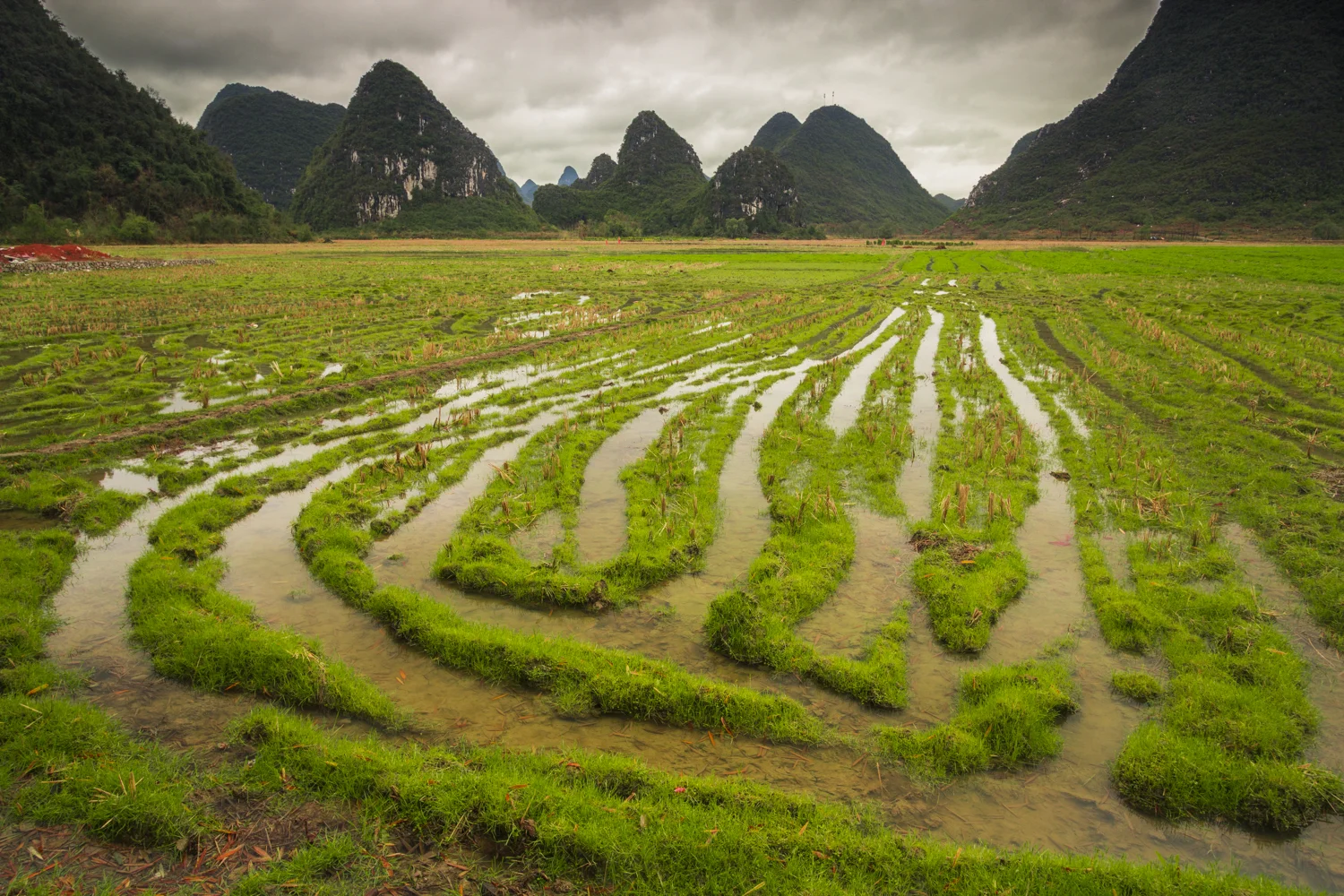
Situated in the northeast of China's Guangxi Zhuang Autonomous Region, Guilin and the greater Yangshuo County boast thousands of verdant karst hills and mountains throughout the countryside. The hills are particularly striking given their frequent presence in the generally flat farmland.
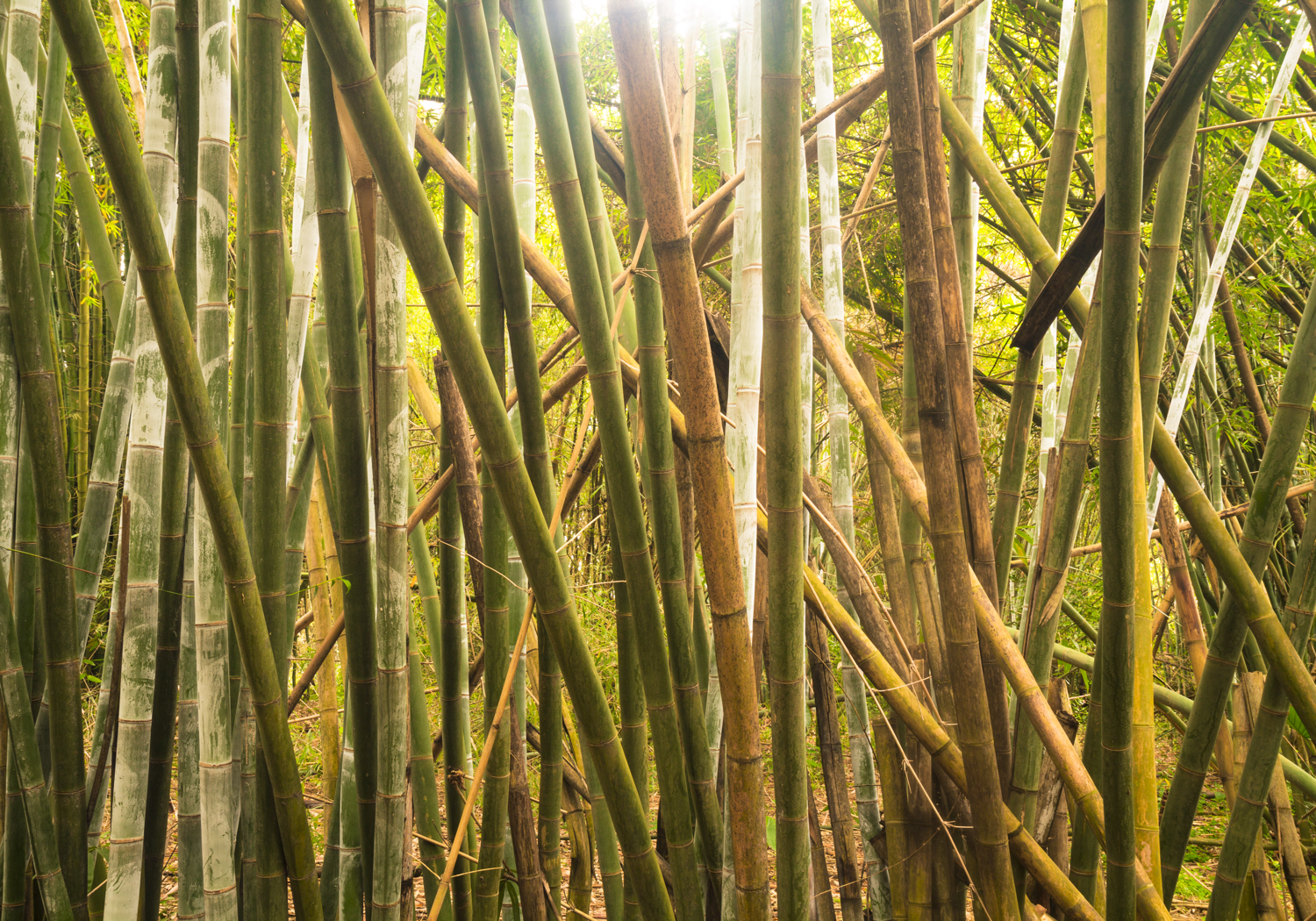
Ample rain, fog, and mist irrigate the Guilin karst mountains and allow dense forests to grow around them. Much of this forest is bamboo, which functions as a highly practical and utilitarian plant used in construction and transportation throughout the region.


Gobi Desert (Badain Jaran desert)
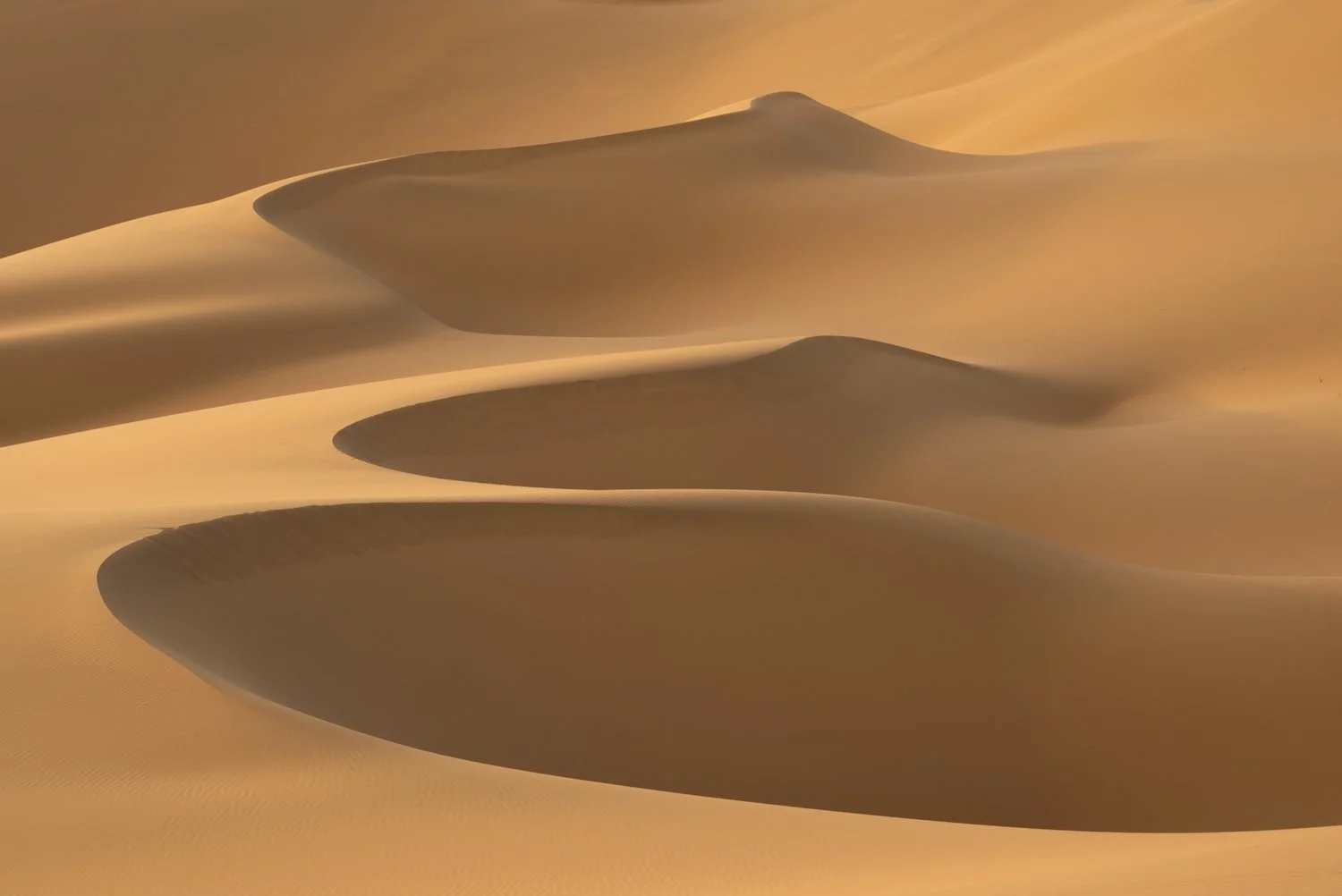
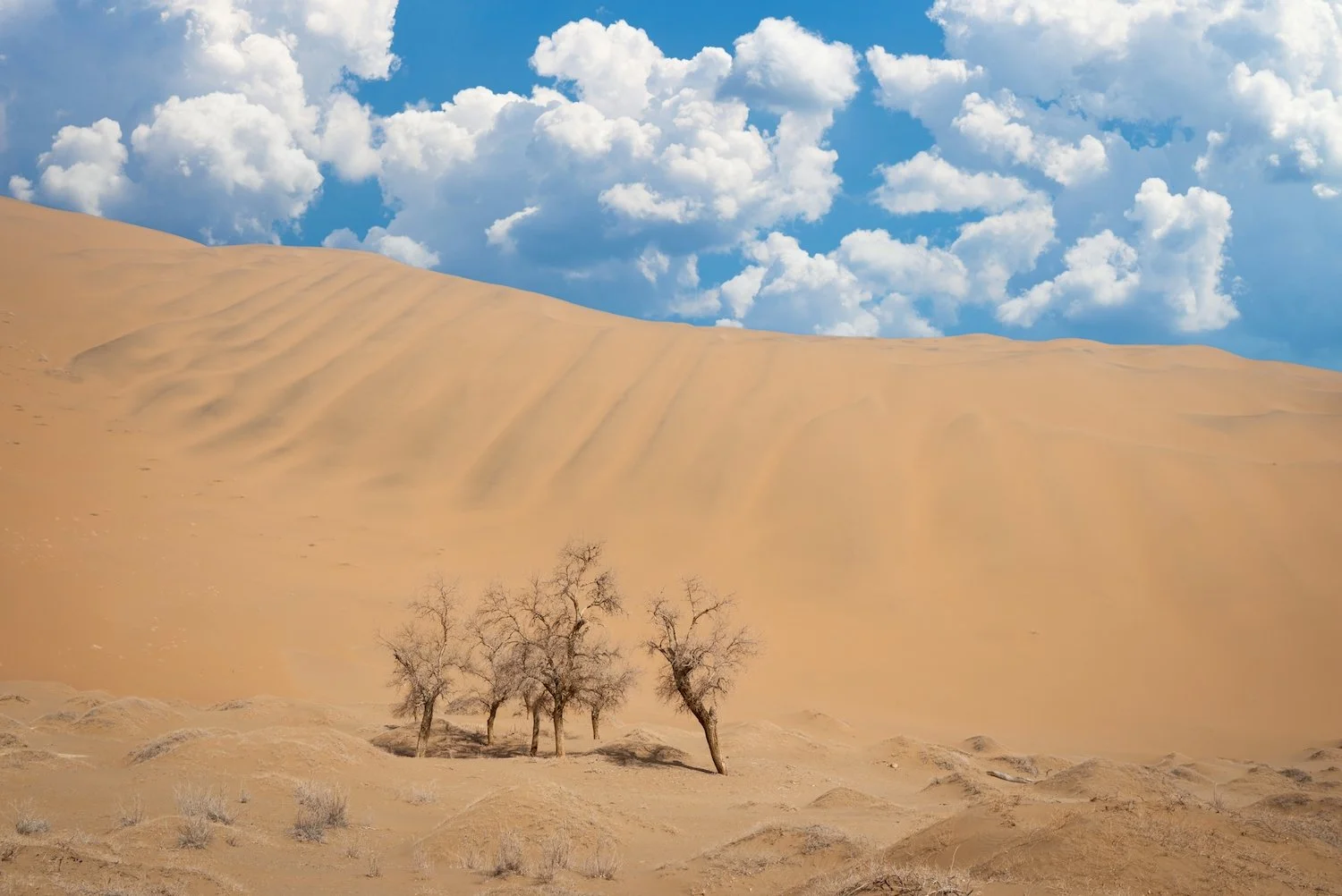
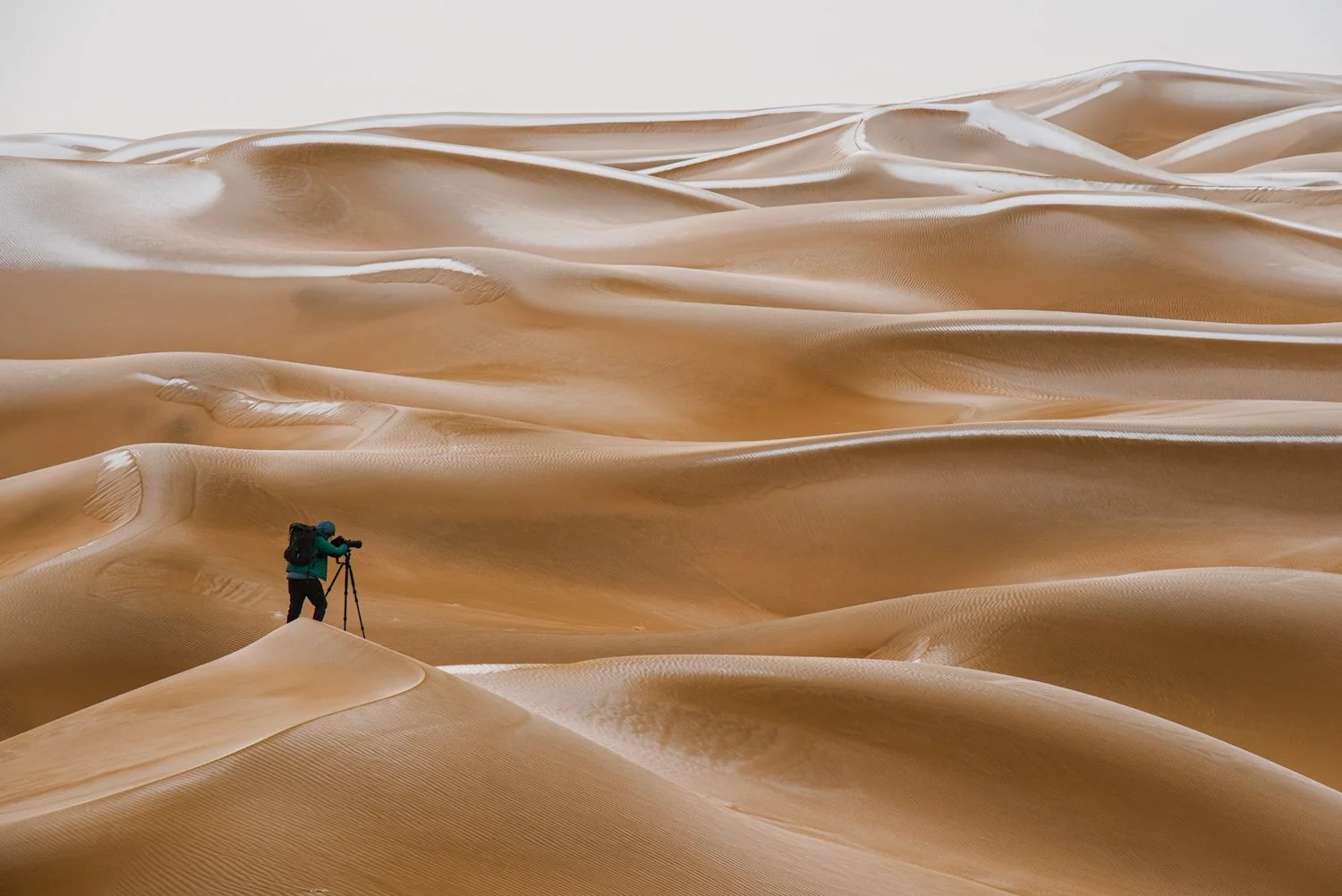
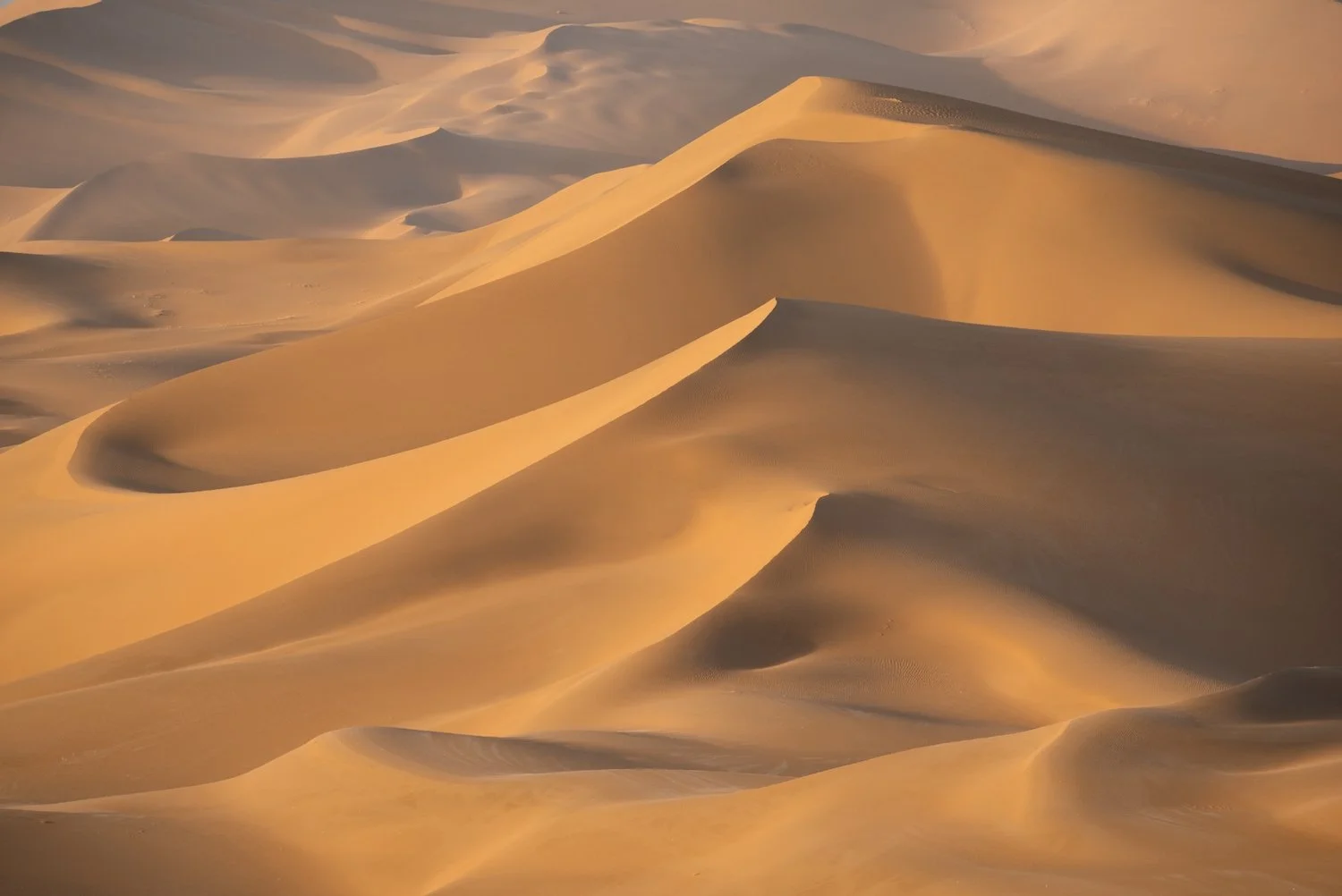
Straddling the border between Inner Mongolia and the southern reaches of the Mongolian plateau, the Gobi is the largest desert in Asia and one of the most geographically extreme environments on Earth. The Badain Jaran section, located in Inner Mongolia's Alxa League, is defined by towering sand dunes, some of the tallest in the world, rising over 500 meters from the desert floor. These are vast, muscular formations, shaped by opposing winds into complex ridgelines and deep shadow bowls that reward slow, careful observation.
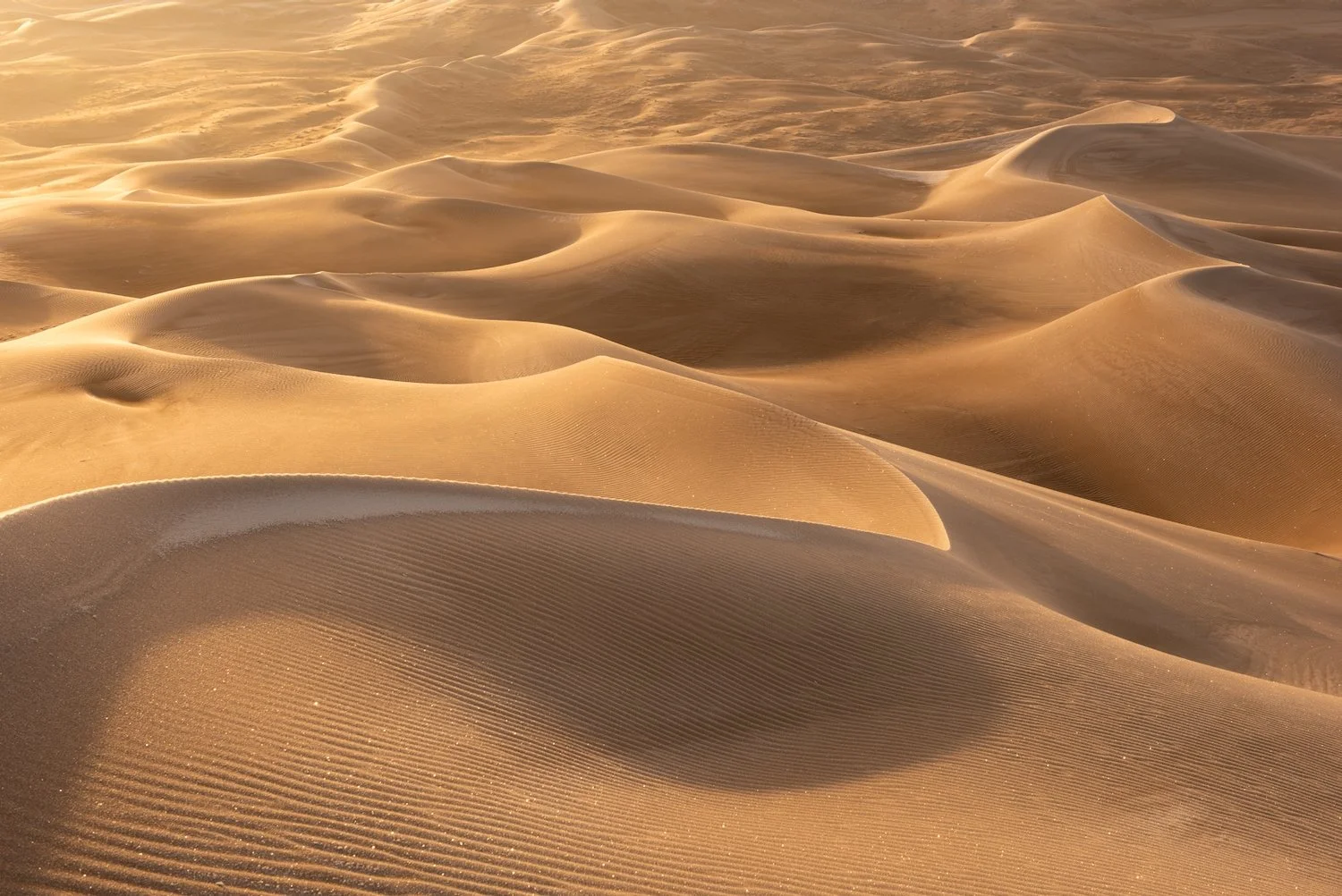
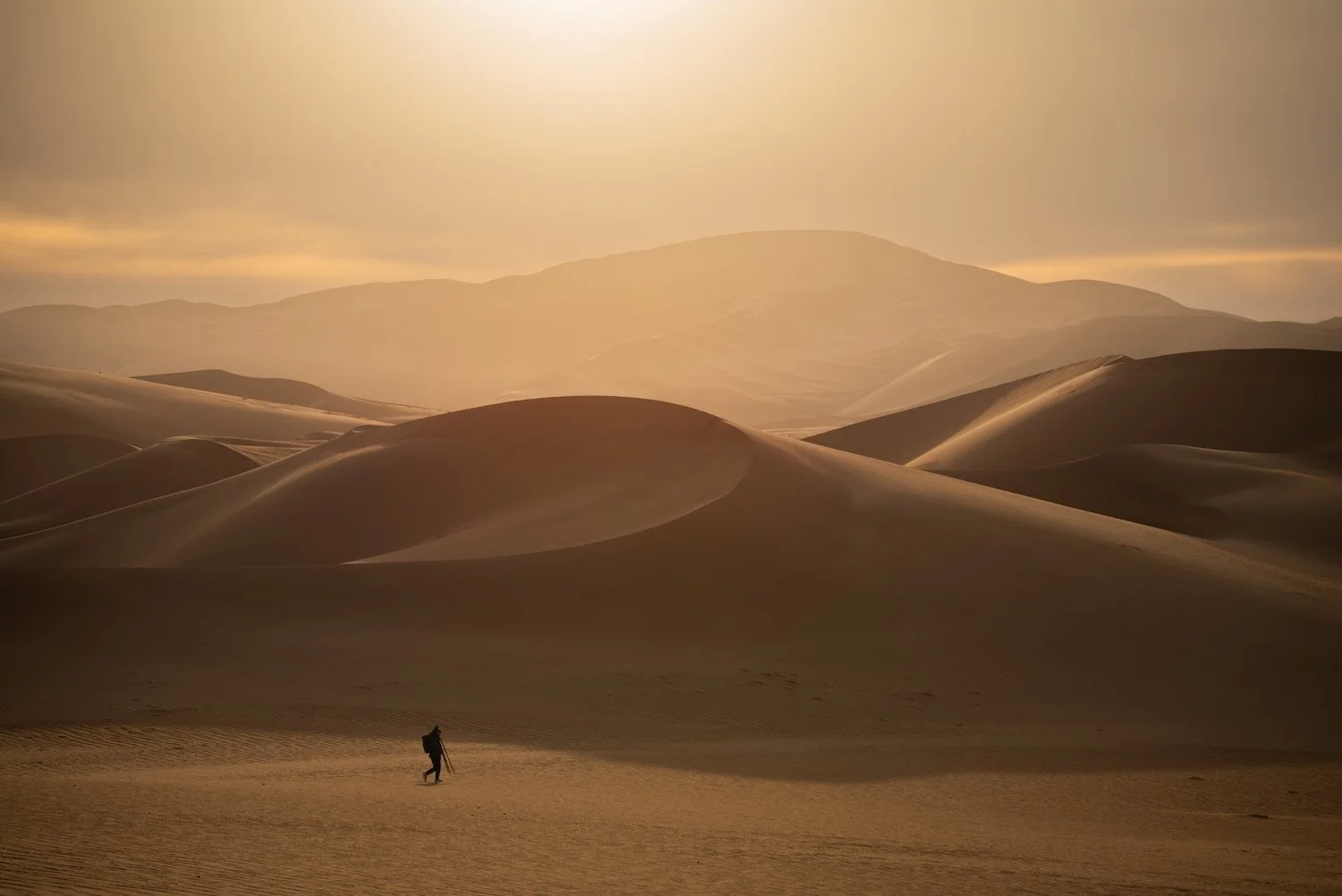
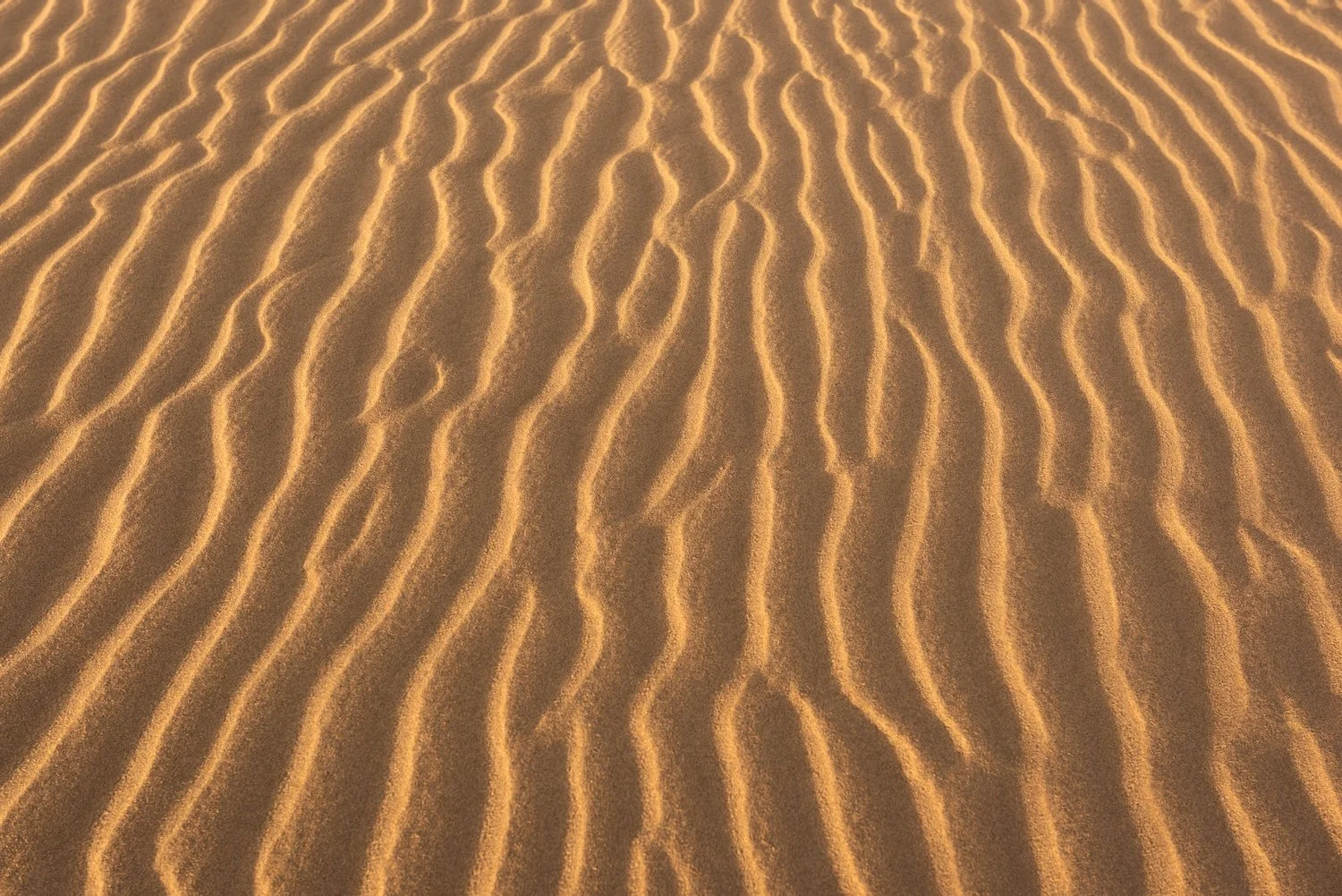
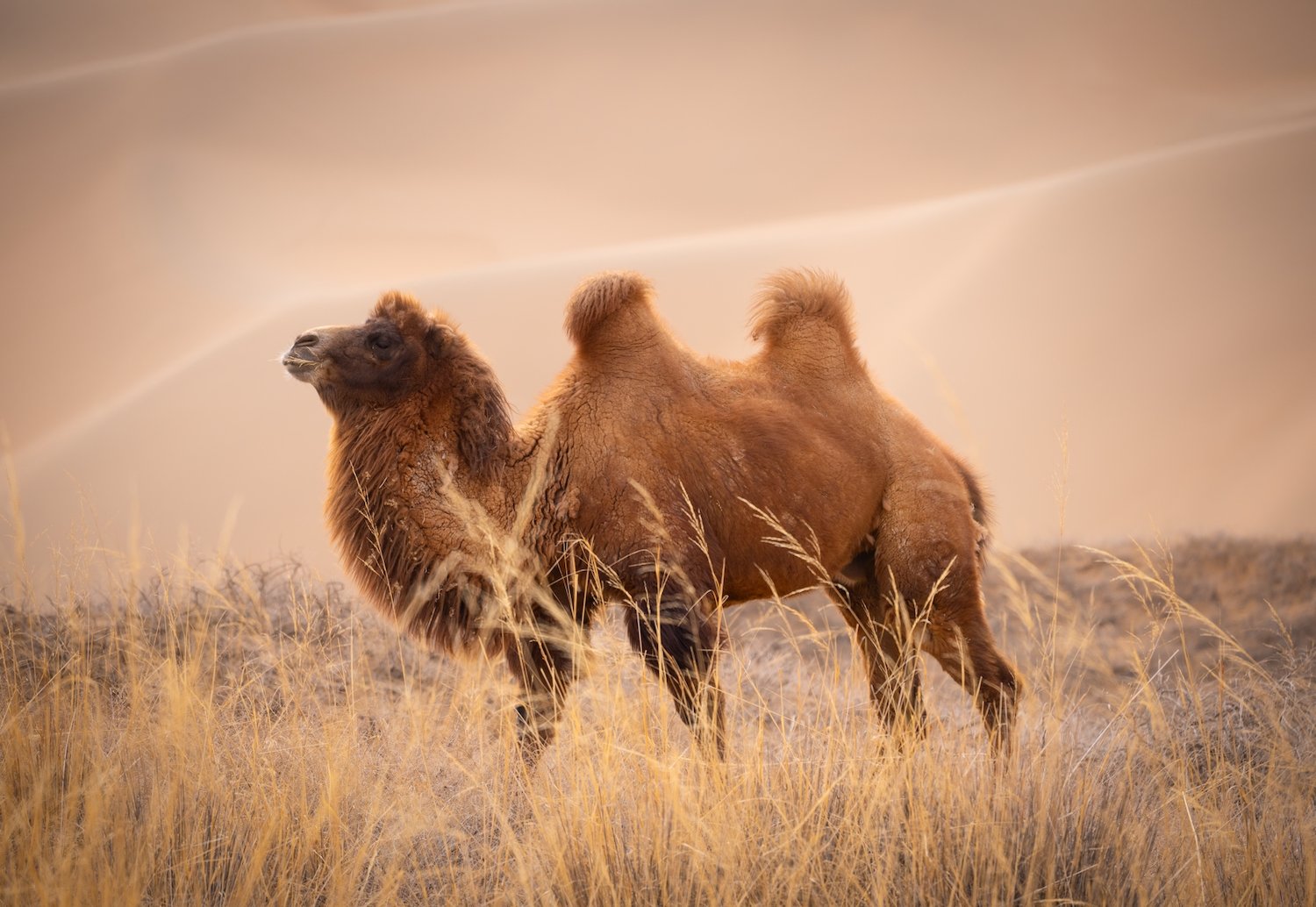
What makes Badain Jaran exceptional for photography is the relentless geometry of the dunes. Every surface is a study in line and form: razor-sharp crests, smooth patterns, dark hollows pooled in shadow. At ground level, the rippled textures etched into the sand by the wind resolve into intricate abstract patterns that seem almost too precise to be natural.
The golden hours are where the landscape truly comes alive. Low-angle light rakes across the dune faces at sharp angles, carving dramatic contrasts between illuminated ridges and deep shade below. During hazy evenings, distant dunes dissolve into atmospheric layers, giving the scene a painterly depth. Bactrian camels, the two-humped variety native to Central Asia, roam the desert's outer margins, grazing on dry grasses in the transitional zones between dune and steppe, a reminder that this landscape has sustained both wildlife and human passage for millennia along the ancient Silk Road.
Mount Hua (Huashan)
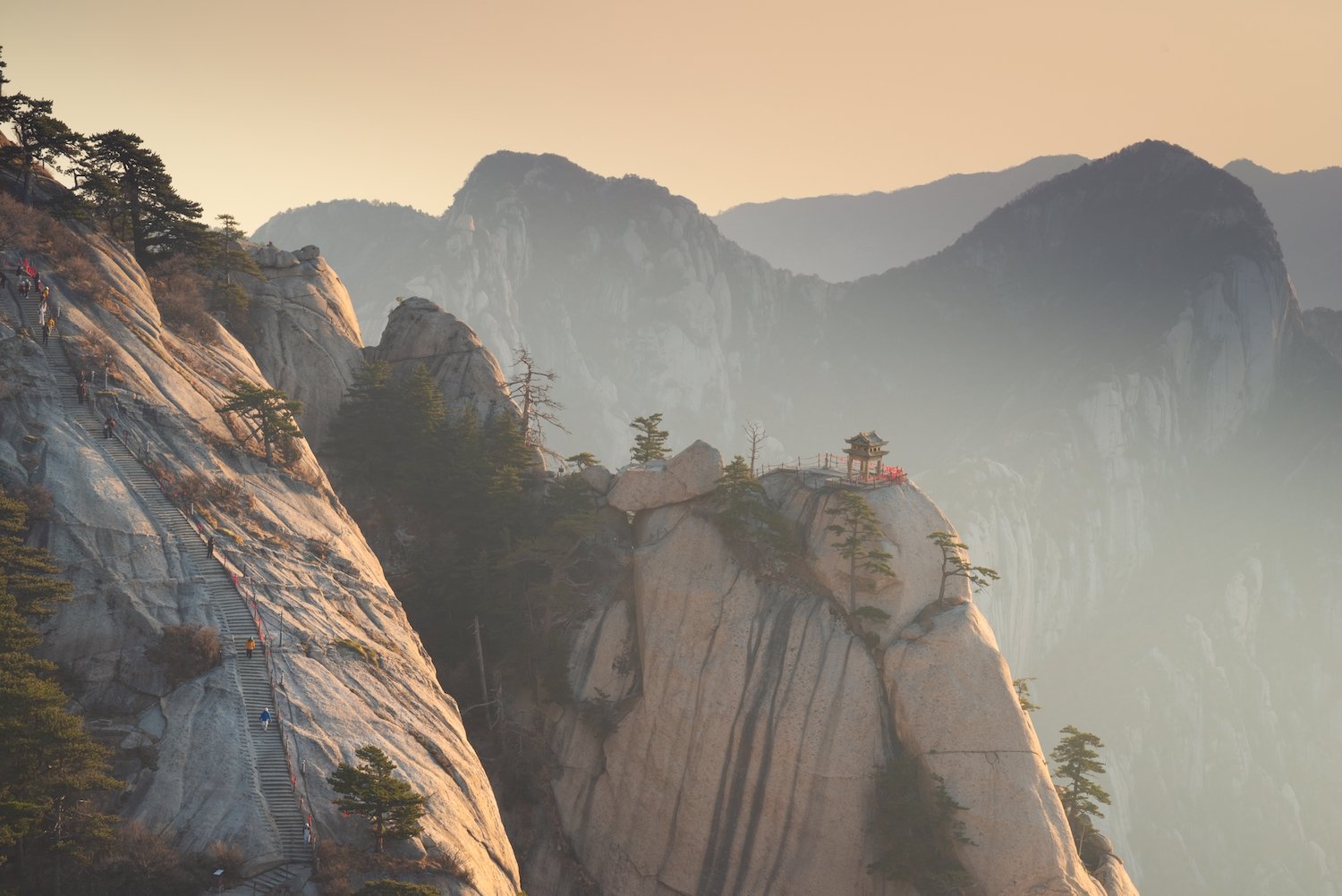
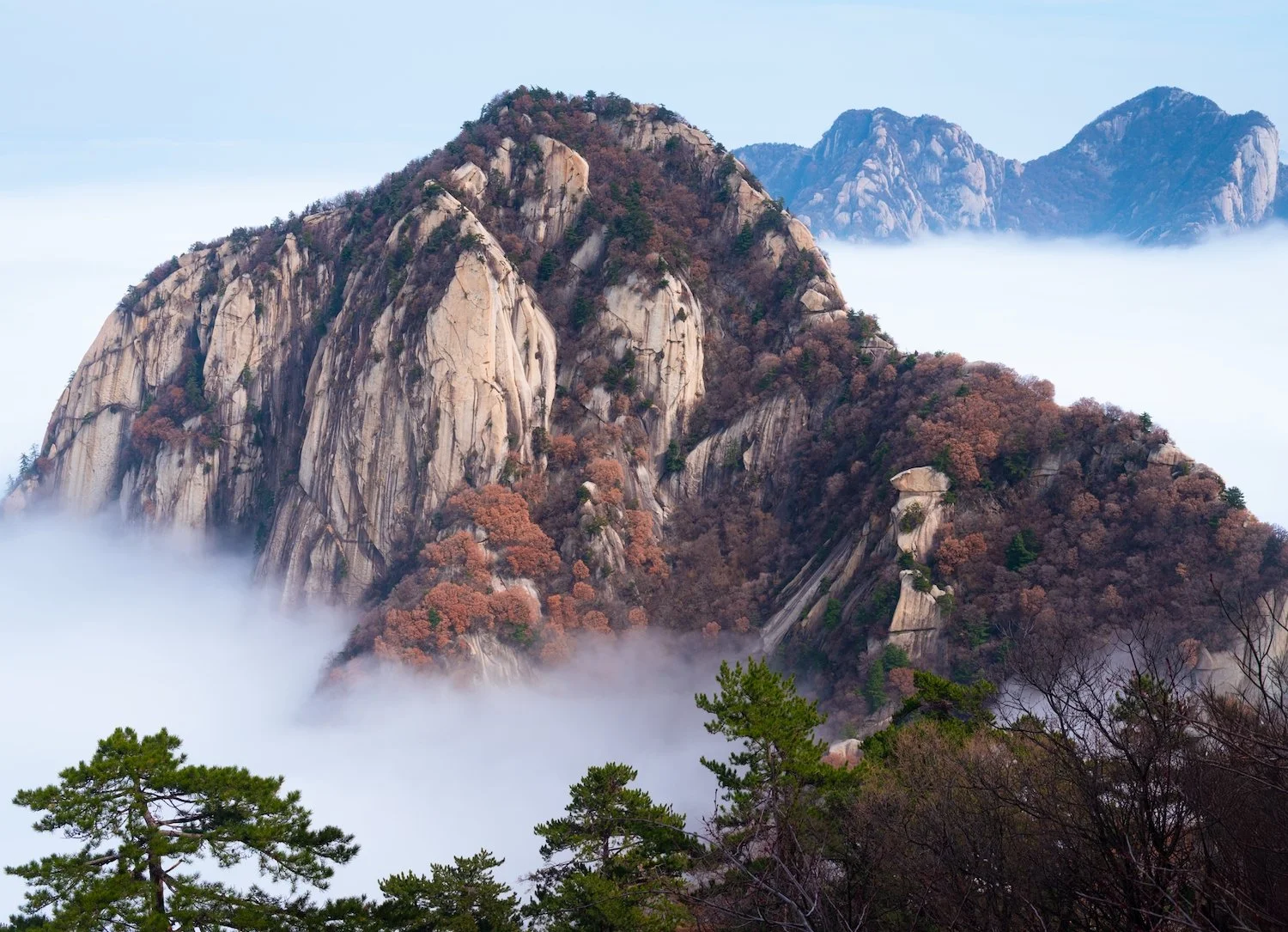
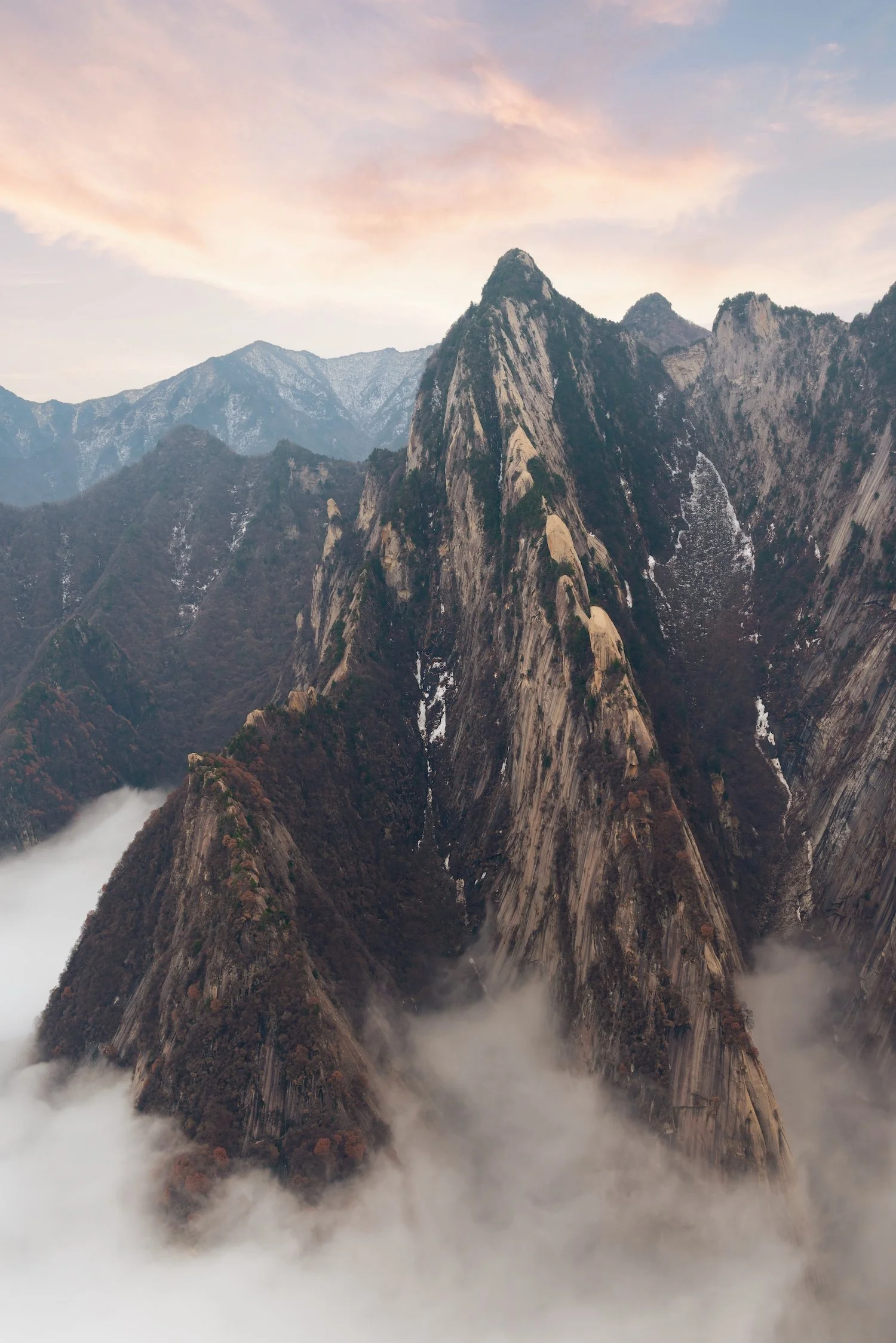
Rising abruptly from the plains of Shaanxi Province, Mount Hua is one of China's Five Sacred Mountains and arguably its most dramatic. Where Huangshan's (profiled above) peaks are numerous and layered, Huashan is defined by a single massif of sheer, striated granite that cleaves into five distinct summits, each connected by narrow ridgelines and stone staircases cut directly into the rock face. The mountain has been a site of Taoist worship for over two thousand years, and small temples and pavilions perch on its most exposed outcroppings, adding a human scale that makes the verticality of the terrain all the more striking.
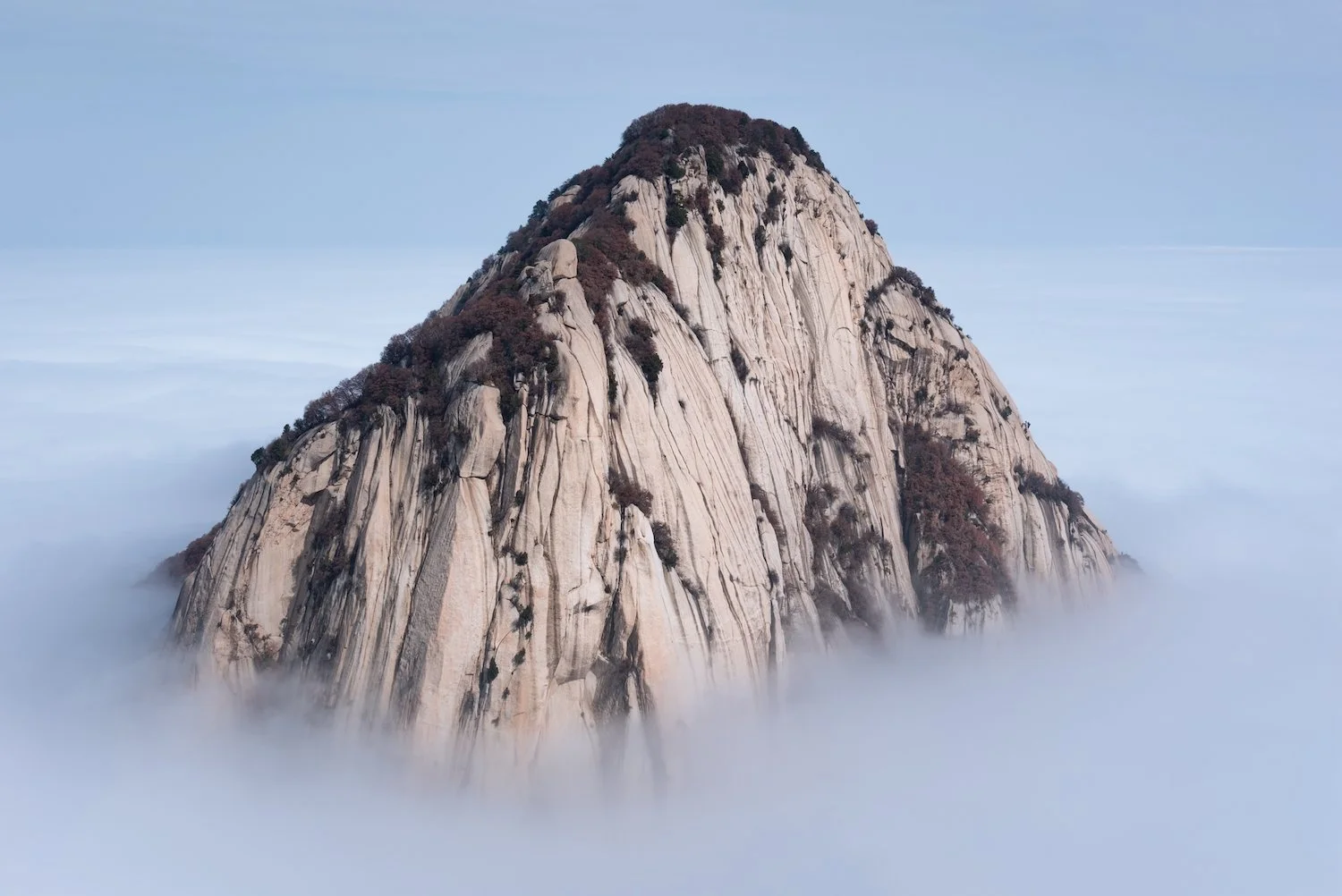
Like Huangshan, Huashan experiences its own spectacular sea of clouds, particularly in the cooler months. When conditions align, a dense blanket of fog fills the valleys and lower slopes, leaving only the highest peaks exposed above the white. Individual summits become isolated islands of granite, surrounded on all sides by cloud, their autumn foliage and wind-bent pines the only color against a pale, horizonless sky.
Zhangjiajie/Wulingyuan
Renowned the world over for its soaring rock spires, Zhangjiajie is a geopark located in Hunan Province in central China. There are over 3,000 stone peaks and pillars in this astonishing park, 1,000 of which are more than 200 meters high. The eroded sandstone landscape, along with its many lakes, forests, natural bridges, river valleys, and narrow gorges, has inspired hundreds of years of Chinese landscape painting and artistic imagination.
The winters here are cold and wet, and the frost and ice freeze the trees and rock. In these conditions, the landscape transforms into a dreamlike blanket of white, as illustrated by the pictures below.


Zhangye Danxia National Geopark
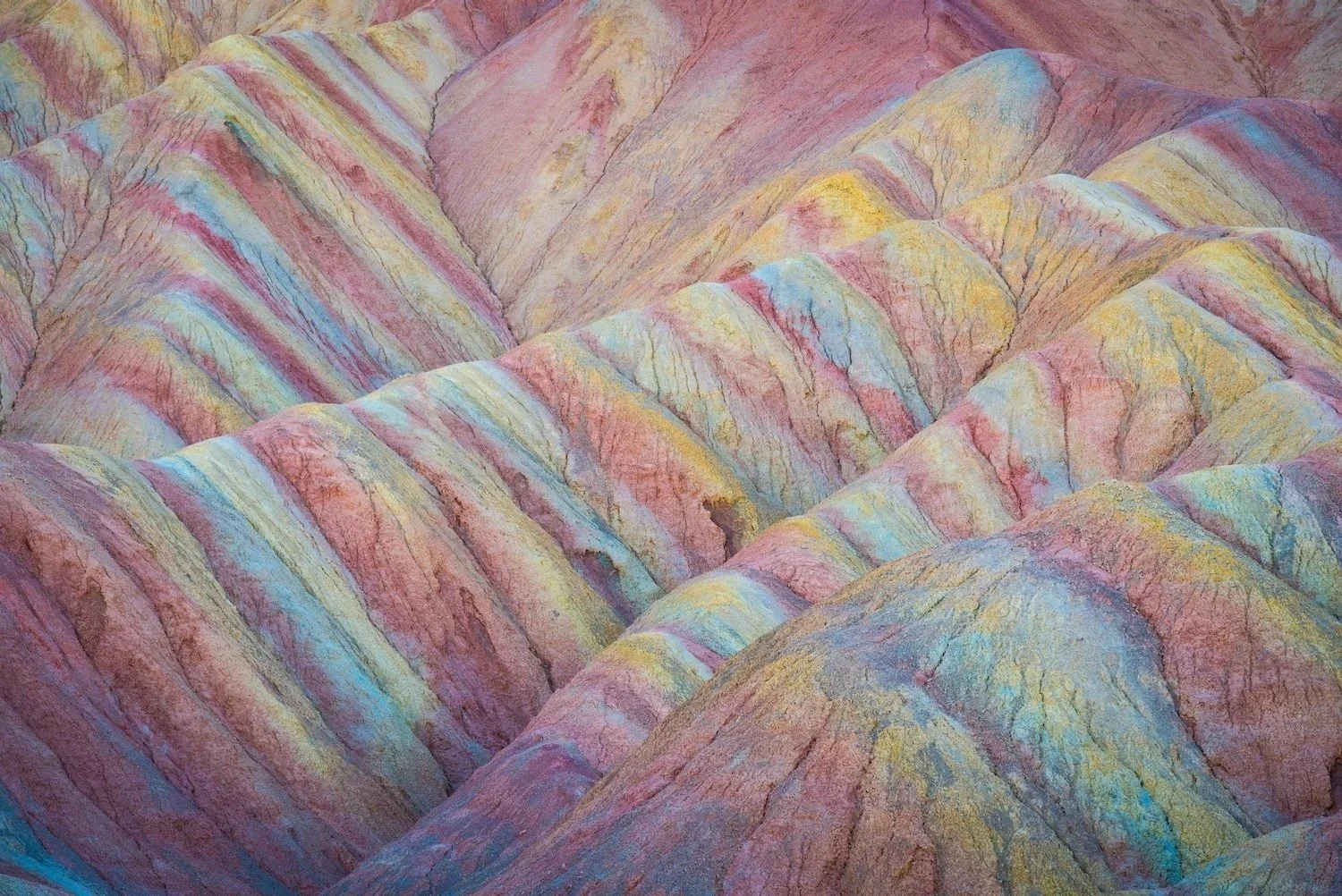
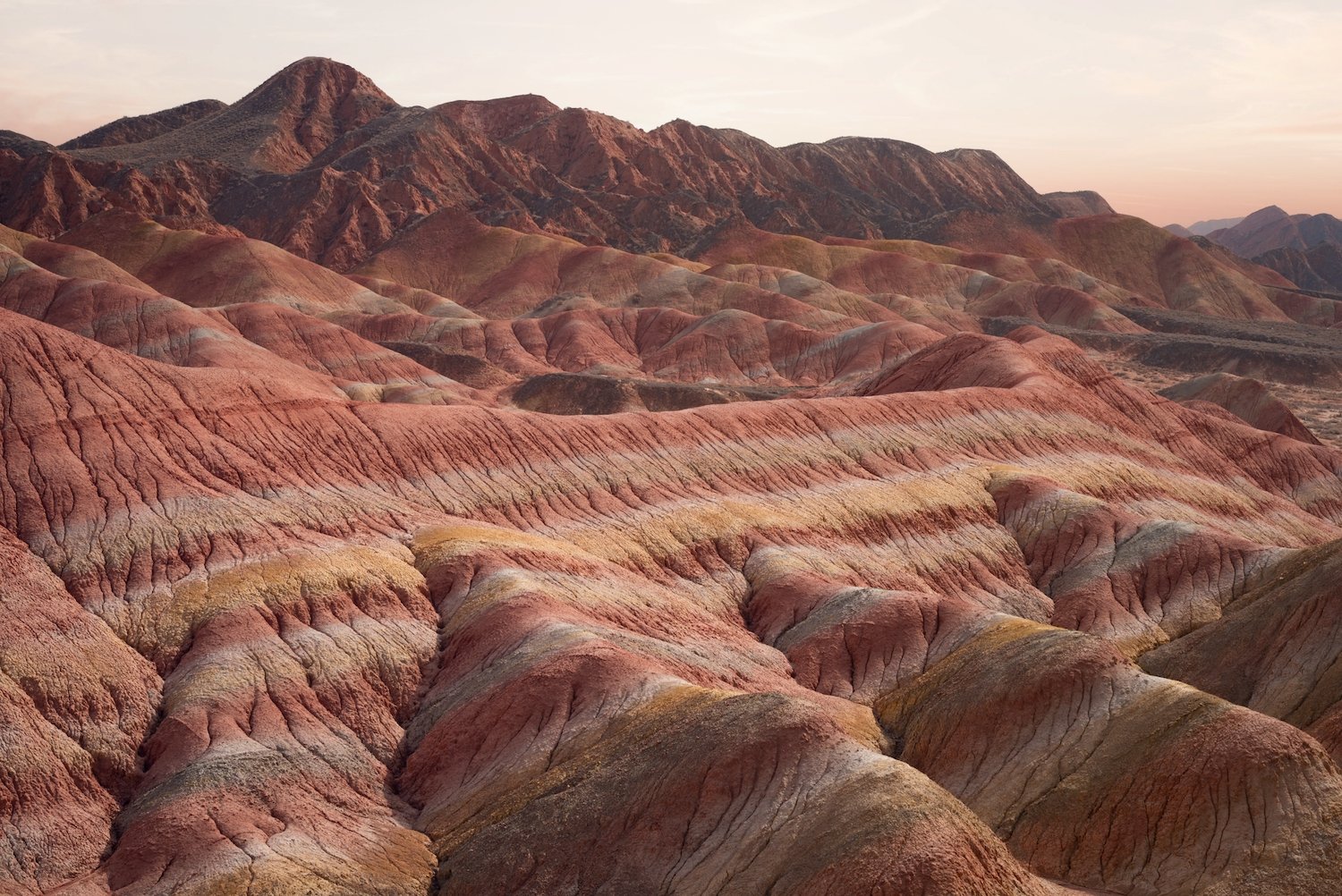
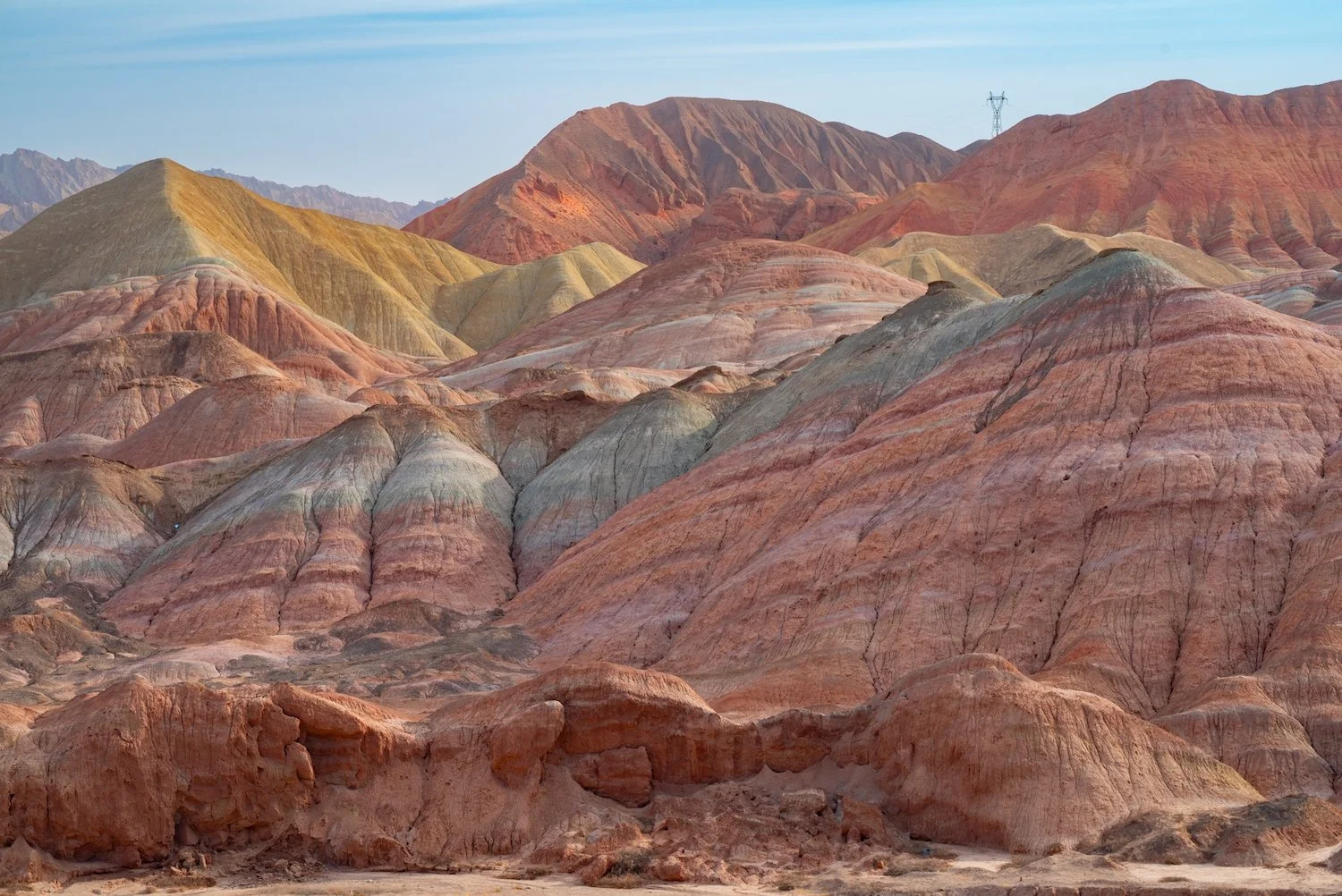
One of China's most visually astonishing geological landscapes, Zhangye Danxia is located in Gansu Province along the ancient Silk Road corridor. The hills here are composed of red sandstone and mineral-rich sediments deposited over 24 million years, then folded, uplifted, and eroded into a rolling terrain of rounded ridges and steep gullies that run in almost every direction. What sets Zhangye apart from other colored badlands around the world is the sheer variety of its palette: deep red, burnt orange, golden yellow, sage green, and pale blue all appear within meters of each other, banded in horizontal layers that record millions of years of changing geological conditions.
The colors shift considerably with the light. Under the midday sun the formations appear almost saturated, their mineral striping vivid and sharp. At sunset, the palette softens into something quieter and more unified, dusty pinks and muted terracottas settling across the ridgelines as the sky above fades to rose.
Imperial Chinese Architecture
China's imperial dynasties left behind some of the most ambitious and enduring built landscapes in human history. Spanning nearly two millennia of construction, from the Qin unification through the height of the Ming and Qing empires, these structures were conceived not merely as architecture but as physical expressions of imperial power, cosmological order, and cultural identity. The three sites below represent some of the finest surviving examples of this legacy, each remarkable not only for its scale but for the landscapes it commands.
The Great Wall of China
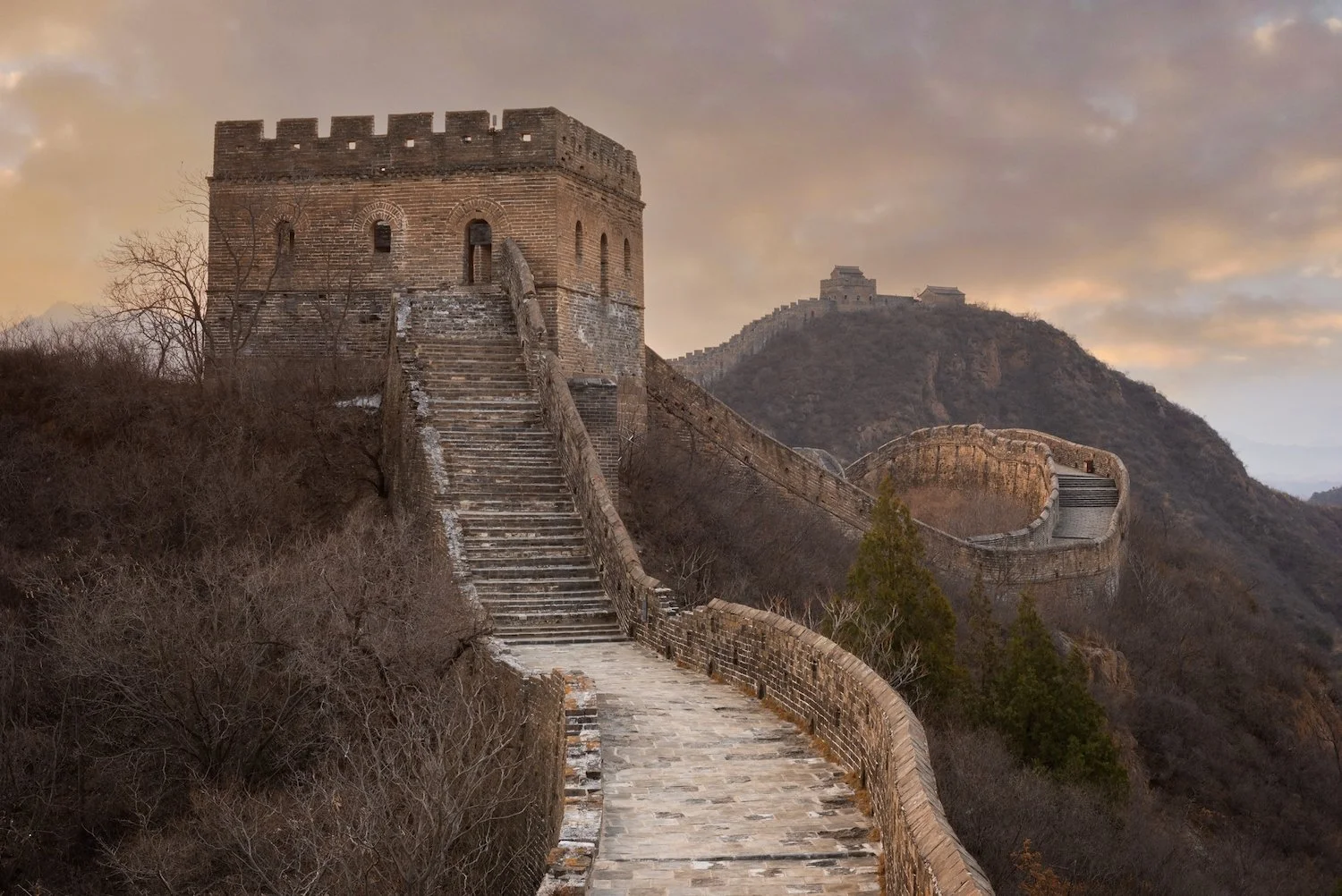
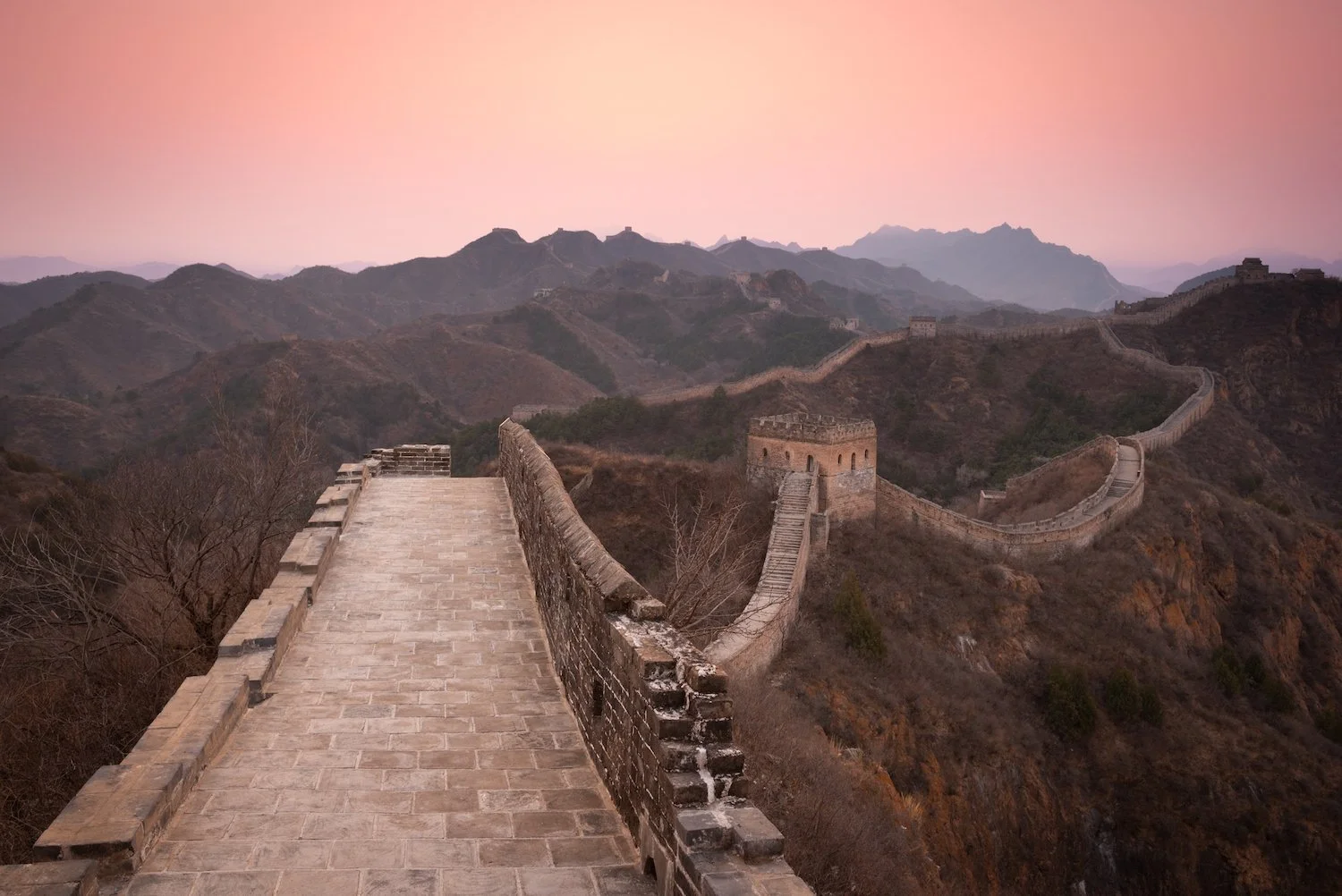
Few human constructions have so completely merged with their natural landscape as the Great Wall. Stretching over 21,000 kilometers across northern China, the Wall was built and rebuilt across multiple dynasties, with the most celebrated sections dating to the Ming dynasty (1368–1644). At Jinshanling, located in Hebei Province roughly 130 kilometers northeast of Beijing, the Wall is at its most photogenic: relatively intact, largely unrestored, and draped across a rugged sequence of ridgelines that rise and fall dramatically toward the horizon. Watchtowers appear at regular intervals along the crest, each slightly different in construction, their silhouettes dissolving into the haze of the mountains beyond.
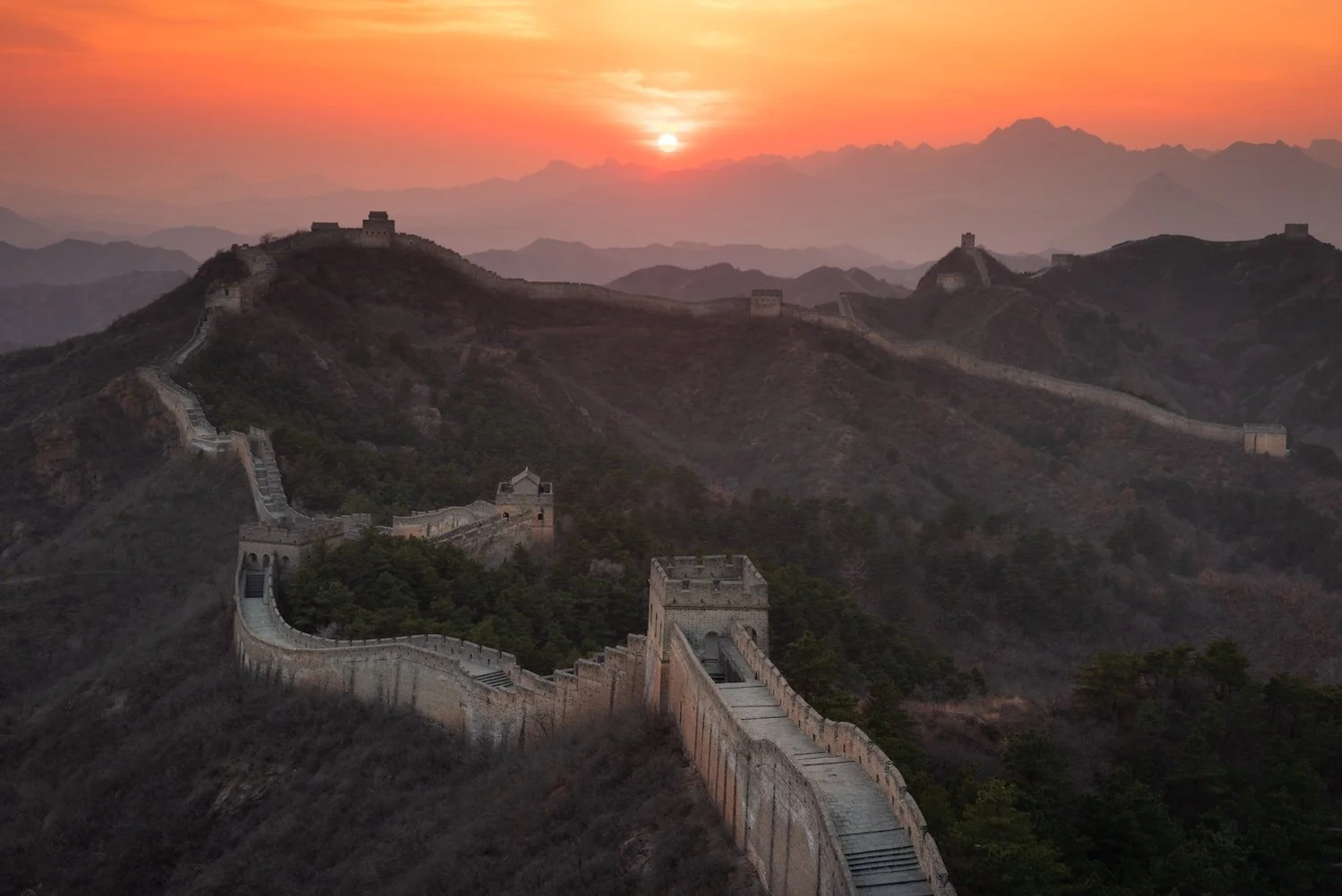
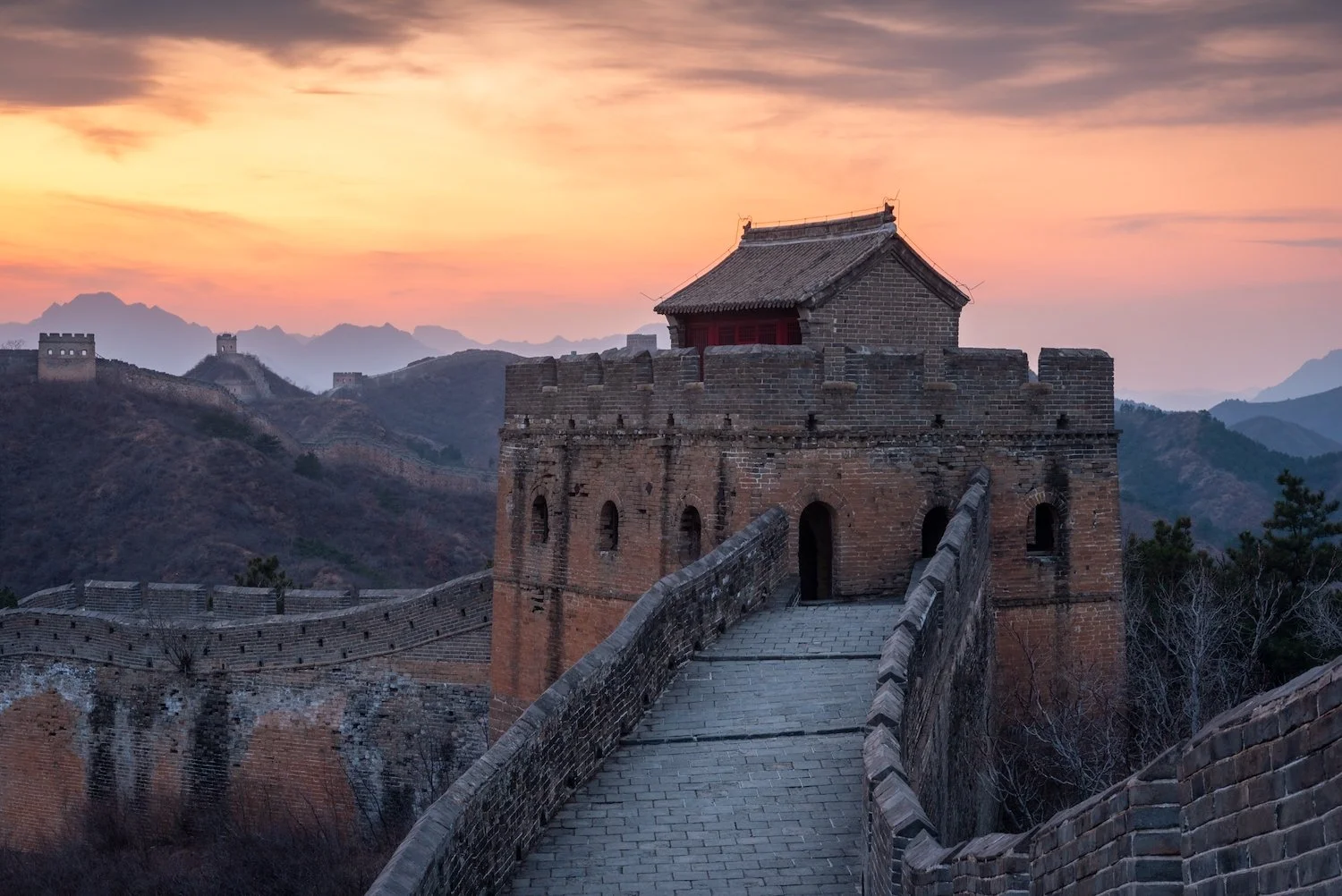
For photographers, the golden hours here are extraordinary. As the sun rises or sets over the surrounding peaks, the Wall glows in colors, its stone walkways and crenellated parapets casting long shadows that emphasize the texture and age of the masonry. The landscape it traverses is inseparable from the structure itself. The Wall does not merely cross the mountains, it hugs them.
During the same trip I also hiked two of the Wall's wilder sections: Gubeikou, largely unrestored and reclaimed by vegetation, and Jiankou, a particularly steep and exposed stretch in Beijing Municipality that is widely considered one of the most dangerous sections due to centuries of structural deterioration.
The forbidden city & jingshan park
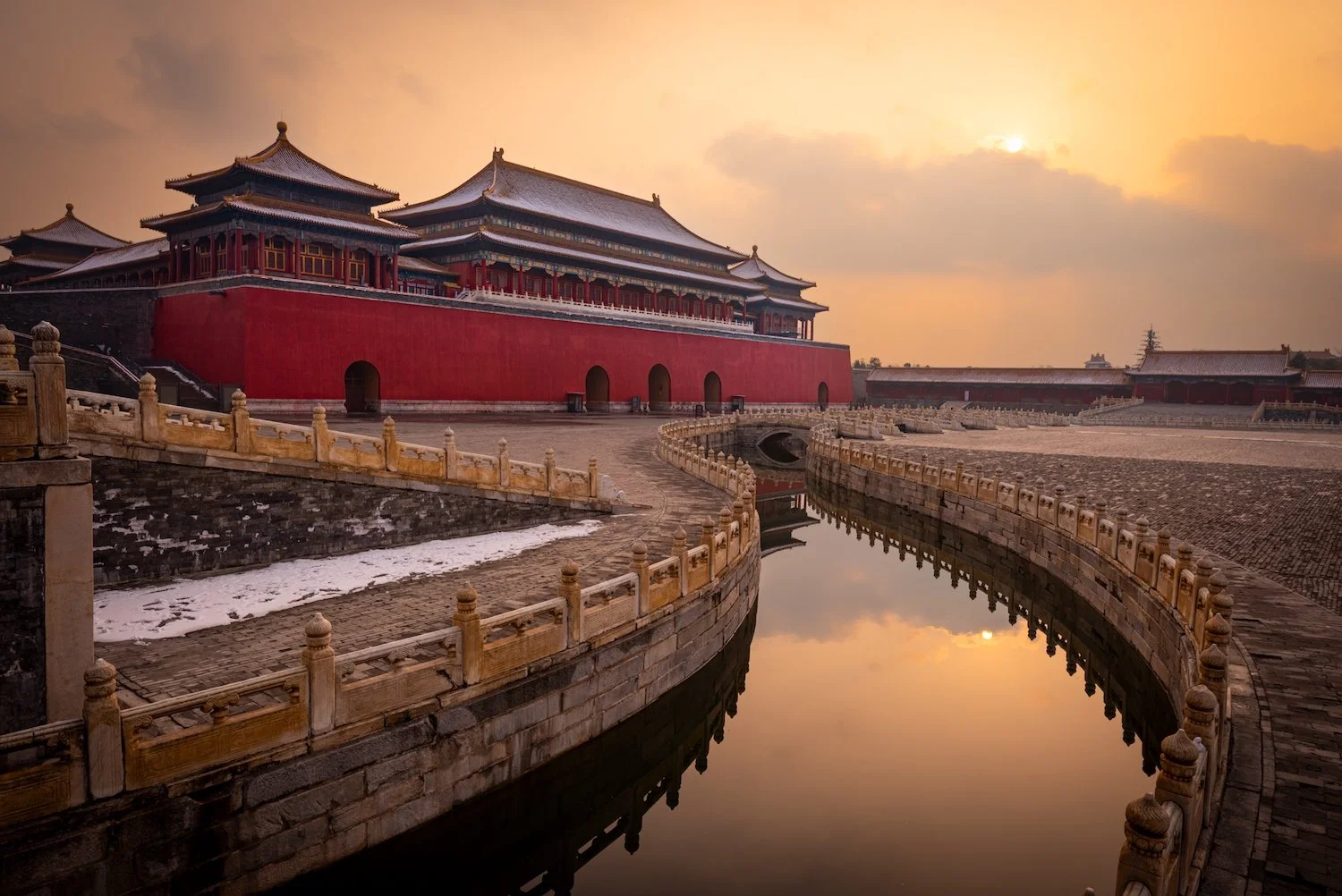
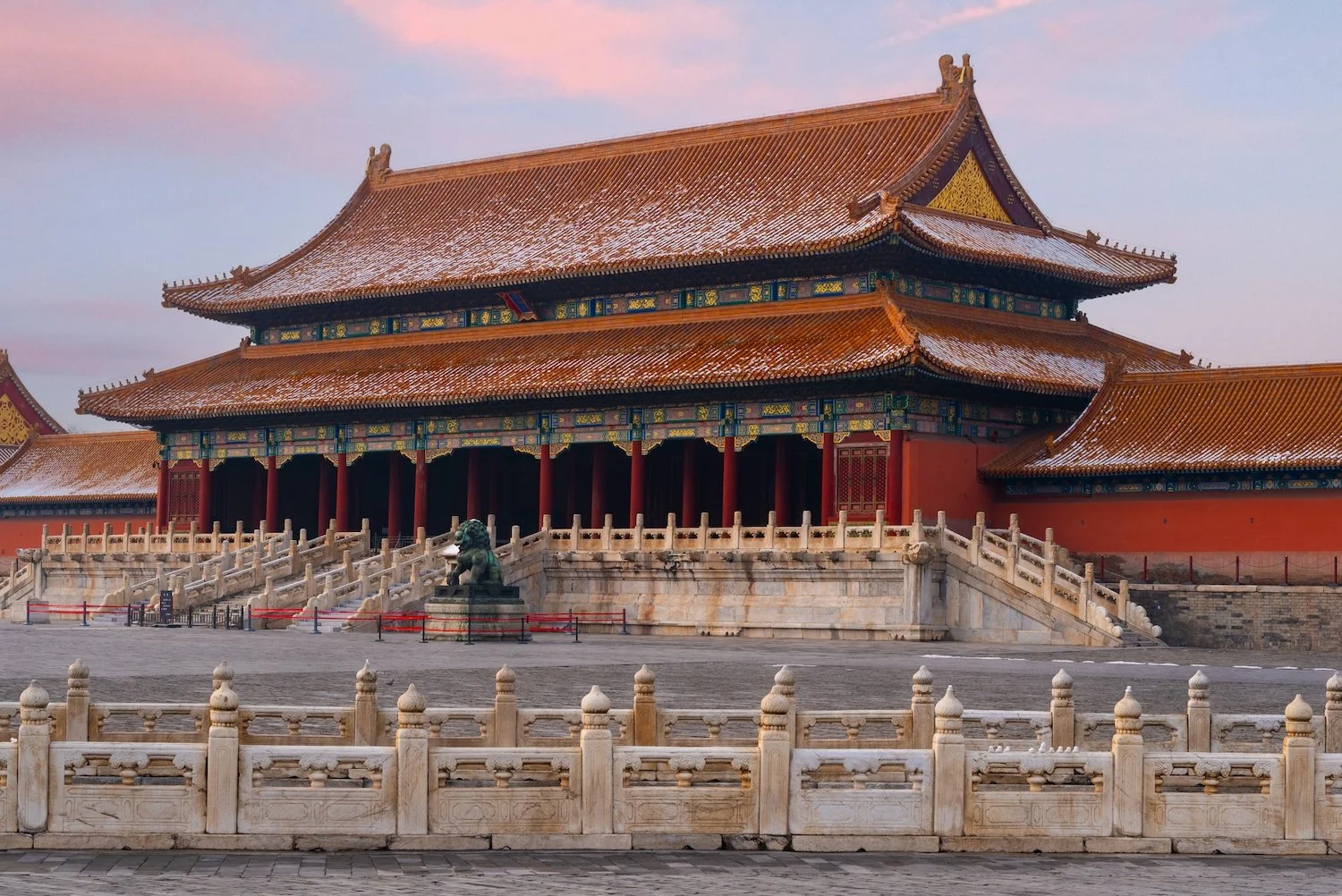
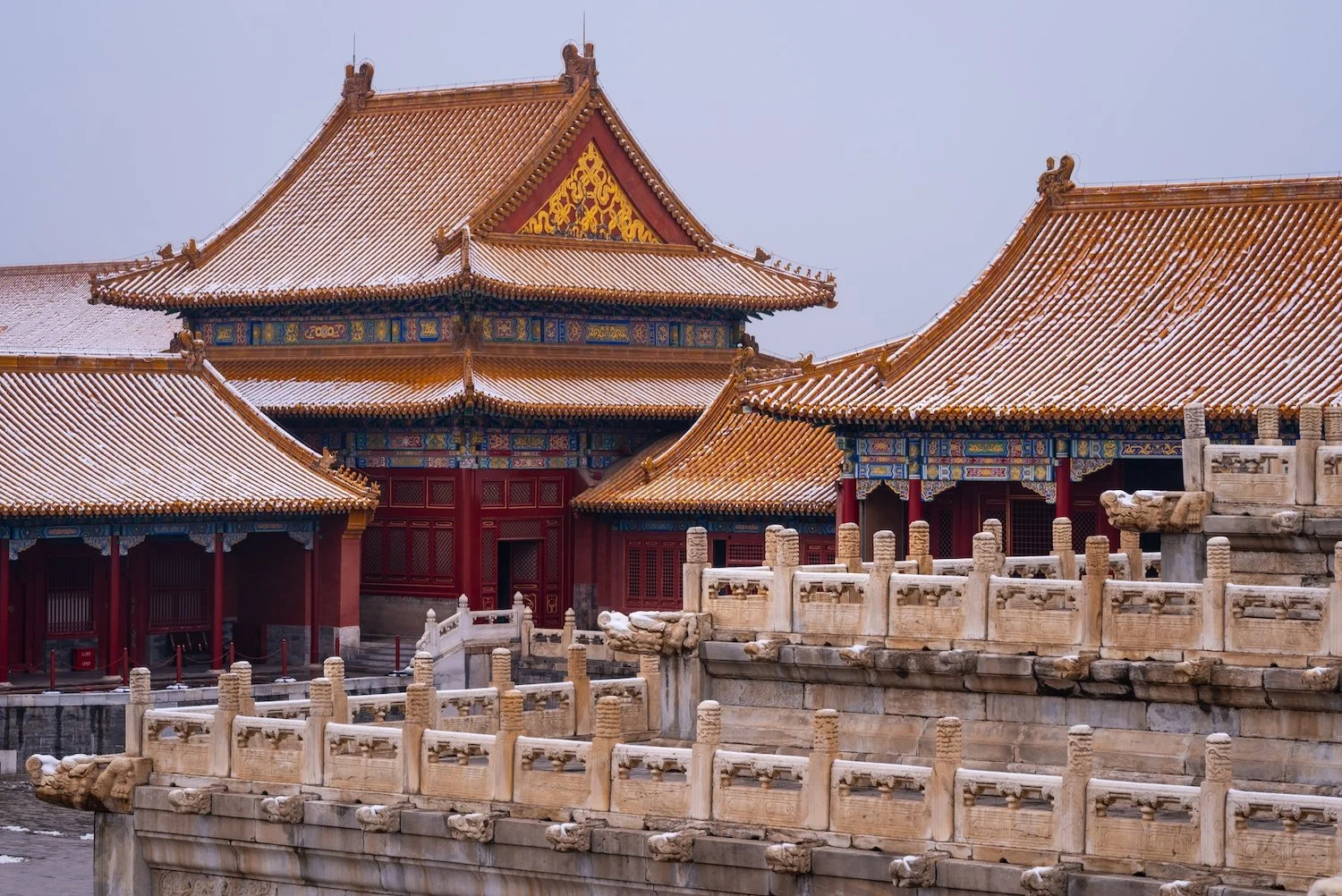
Built between 1406 and 1420 during the reign of the Yongle Emperor, the Forbidden City served as the ceremonial and political heart of China for nearly five centuries, housing 24 emperors across the Ming and Qing dynasties. Located at the center of Beijing, the complex encompasses 980 surviving buildings across 72 hectares, making it the largest palace complex in the world. Its architecture follows strict cosmological principles: a precise north-south axis, concentric layers of enclosure, and a palette of deep crimson walls and golden glazed tile roofs that signal imperial authority at every turn. The details reward close attention, including ornate ceramic dragon friezes, carved marble balustrades, bronze guardian lions, and painted eaves dense with symbolic imagery accumulated over centuries of continuous occupation.
Meridian Gate
Hall of Supreme Harmony
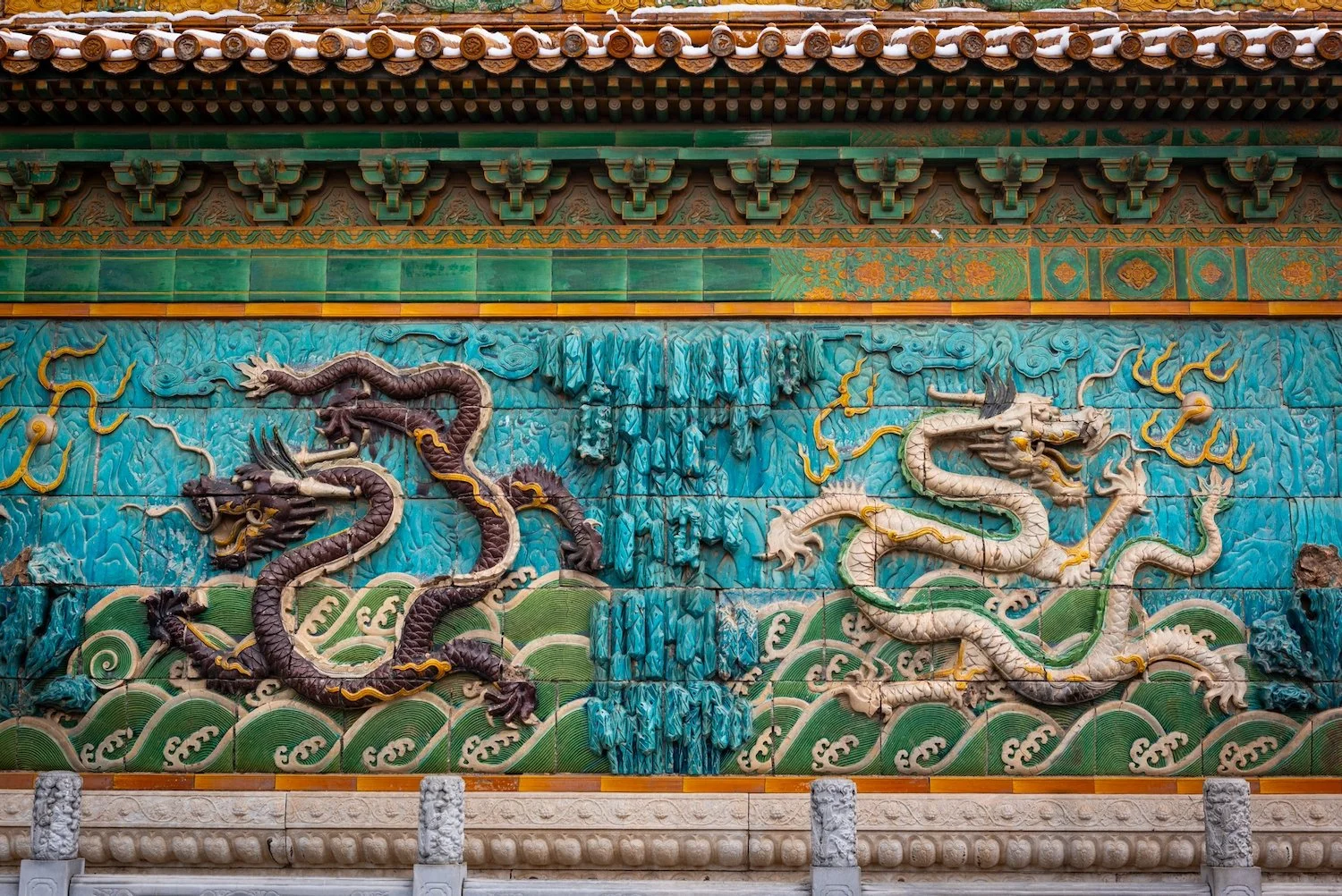
Nine Dragon Wall
For photographers, timing is everything. The complex draws enormous crowds during the day, but visiting late in the afternoon and staying until closing allows for quieter compositions, particularly around the southern Meridian Gate, where the crowds thin considerably and the light softens. The Gate's reflection in the curved Golden Water River (above) is one of the most striking scenes in the entire complex, especially at sunset when the sky turns amber and the still water mirrors the scene almost perfectly.
Nearby, the Temple of Heaven, a separate imperial complex located southeast of the Forbidden City, is equally worth visiting. Its centerpiece, the Hall of Prayer for Good Harvests, is one of the most architecturally distinctive structures in all of China: a circular, triple-tiered wooden tower crowned in deep blue glazed tile, built without a single nail, and used by emperors for annual ceremonies to pray for a good harvest. As a bonus, a short walk north to Jingshan Park, a hill constructed from the earth excavated during the Forbidden City's construction, offers additional examples of fine imperial architecture and an elevated view across the entire complex and its sea of golden rooftops stretching symmetrically in both directions.
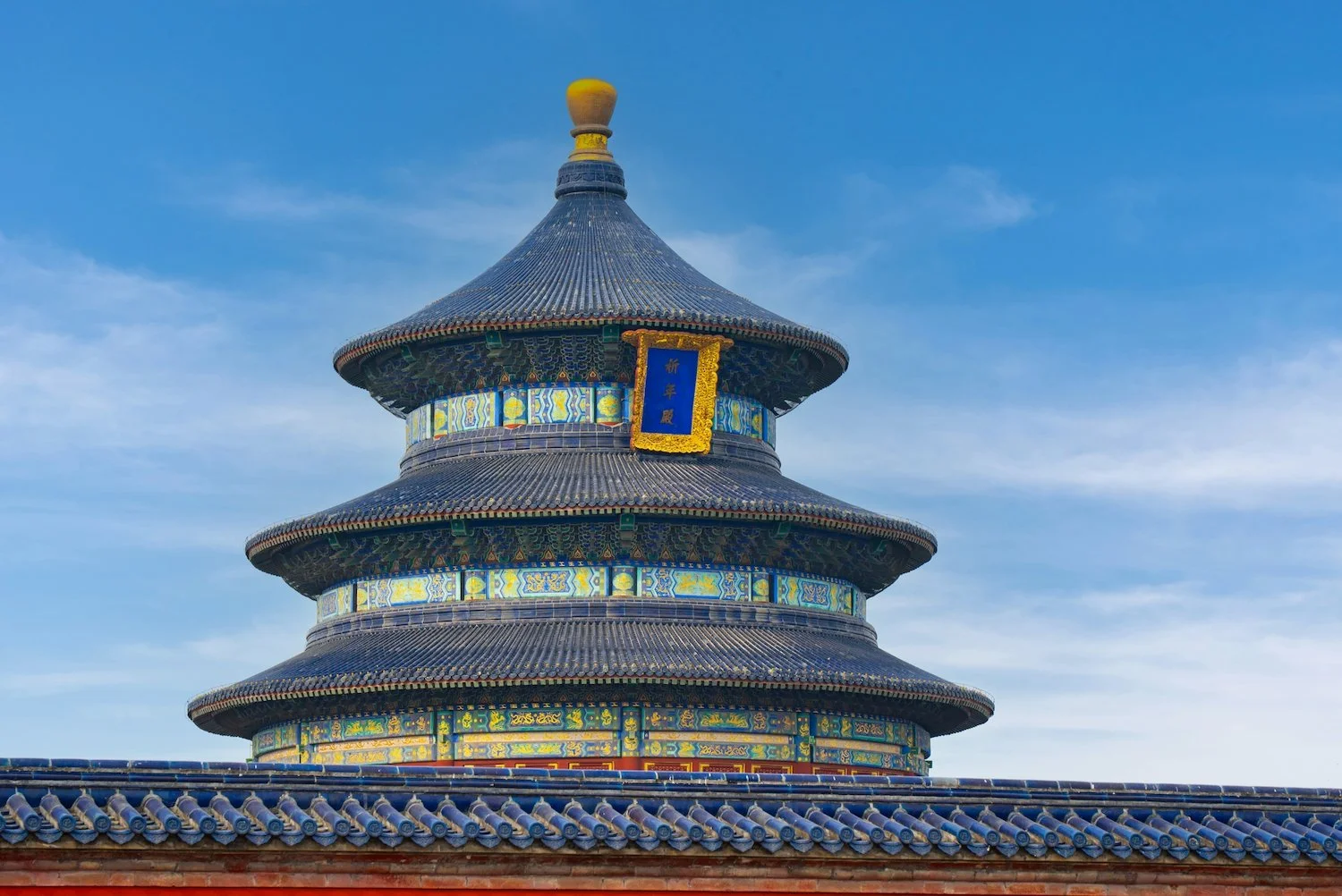
Hall of Prayer for Good Harvests, Temple of Heaven
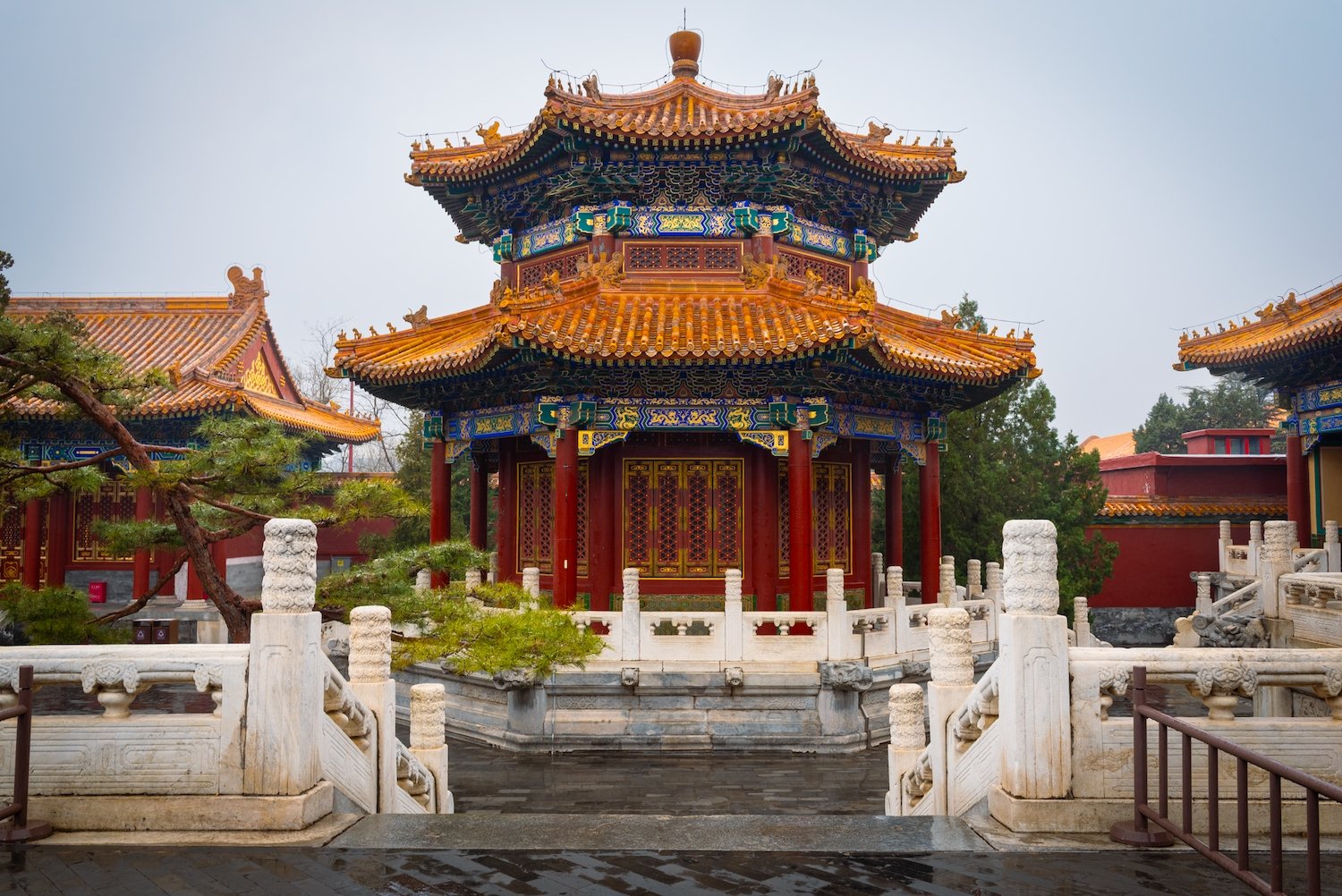
Jingshan Park
Xi'an
One of the oldest cities in China and the eastern terminus of the ancient Silk Road, Xi'an served as the imperial capital for thirteen dynasties spanning over a thousand years. Its layered history is visible at every turn, from the massive Ming-era city walls that still encircle the old town to the remarkable diversity of architectural traditions that coexist within them.
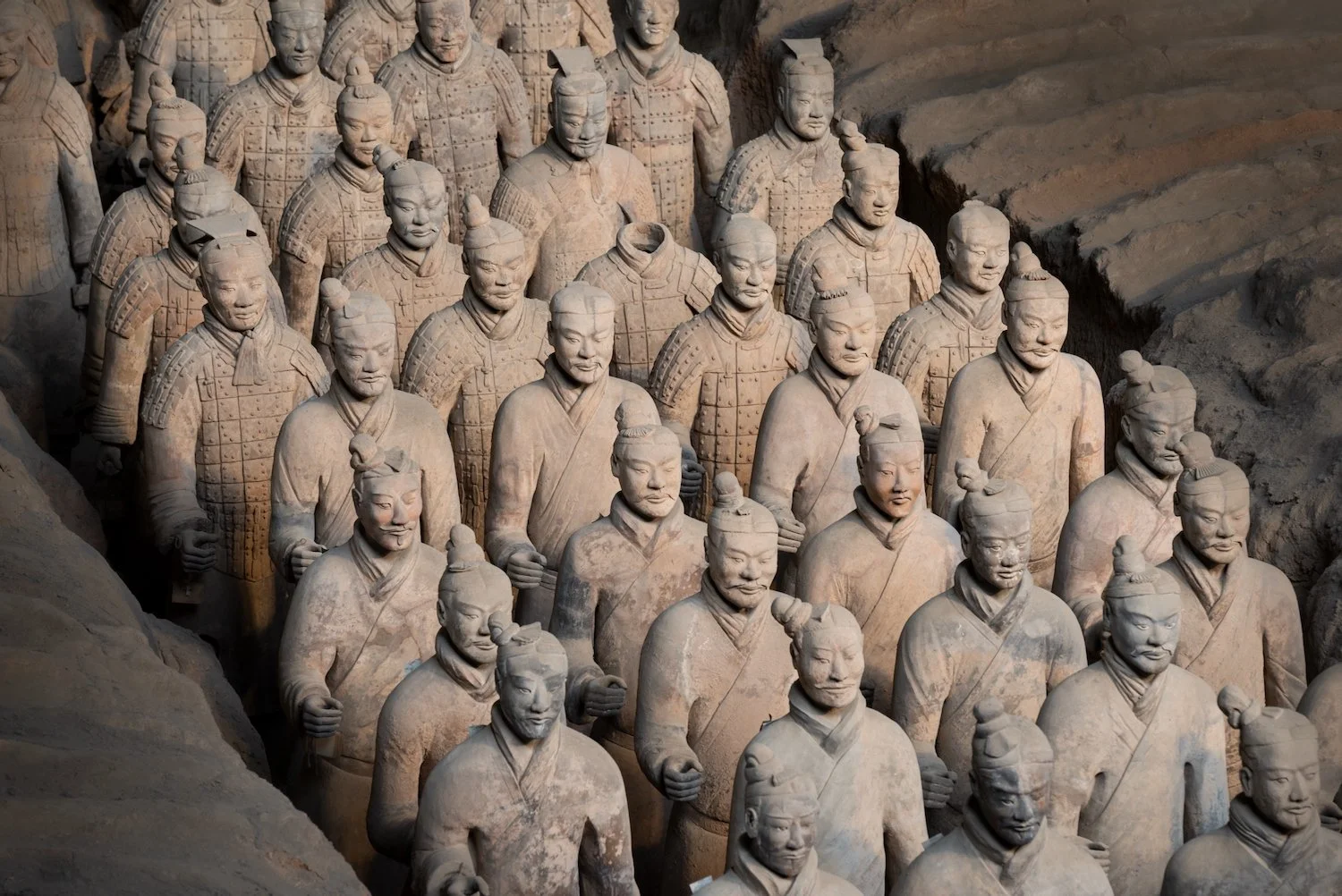
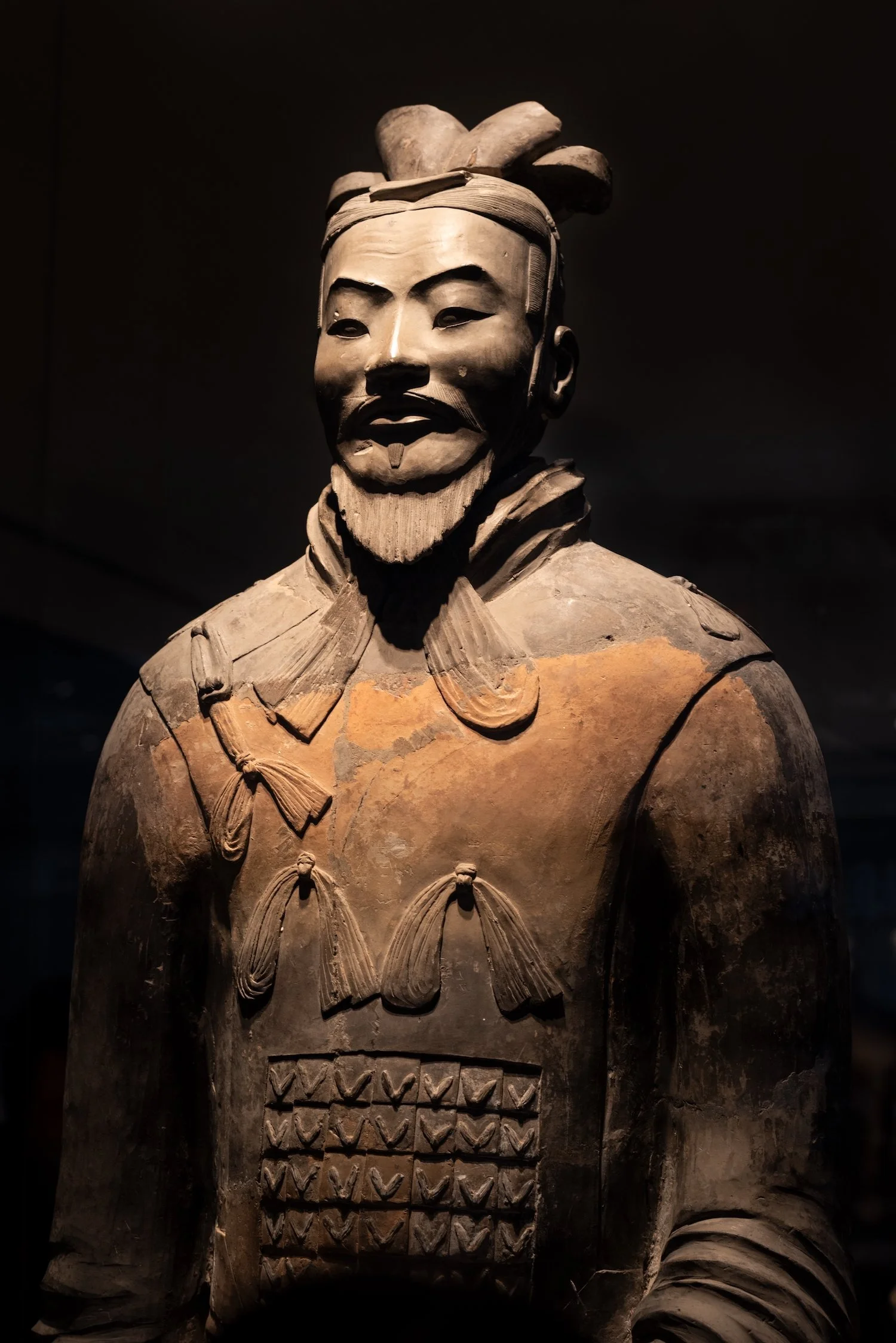
The city's most visited site, and one of the great archaeological discoveries of the twentieth century, is the Mausoleum of the First Qin Emperor and its extraordinary Terracotta Army. Buried around 210 BCE to accompany Emperor Qin Shi Huang into the afterlife, the army consists of over 8,000 life-sized ceramic warriors, each with individually sculpted facial features, hairstyles, and armor. The scale of the three excavated pits is staggering, but it is the intimacy of the individual figures that leaves the deepest impression. Up close, each face reads as a distinct portrait, rendered with a level of craftsmanship that feels startlingly personal across more than two millennia.
Within the old city, the Bell Tower stands at the historic center of Xi'an, a three-tiered Ming dynasty pavilion rising from a massive stone base at the intersection of the city's four main arteries. Originally used to mark the hours of the day, it is now surrounded by a busy roundabout, making it one of the more unusual subjects for night photography: long exposures transform the circling traffic into sweeping arcs of light around the warmly illuminated structure.
Tucked into the Muslim Quarter nearby, the Great Mosque of Xi'an is one of the oldest and most architecturally distinctive mosques in China. Founded in 742 CE and expanded over subsequent dynasties, it blends Islamic religious function with classical Chinese architectural form, its courtyards, pavilions and prayer halls built entirely in the style of traditional Chinese timber construction. The result is a place of quiet, layered beauty, best explored slowly and on foot.
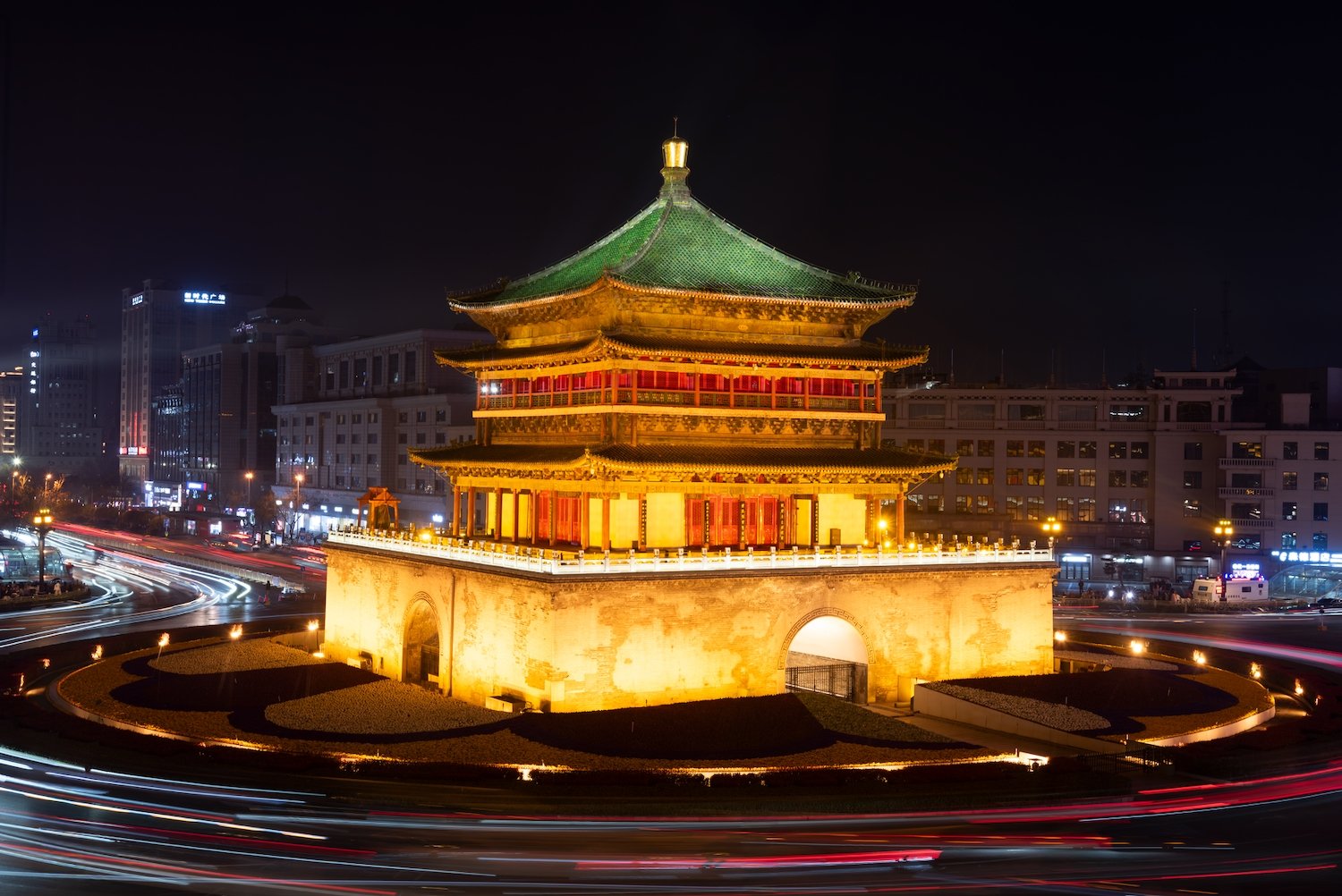
Xi’an Bell Tower
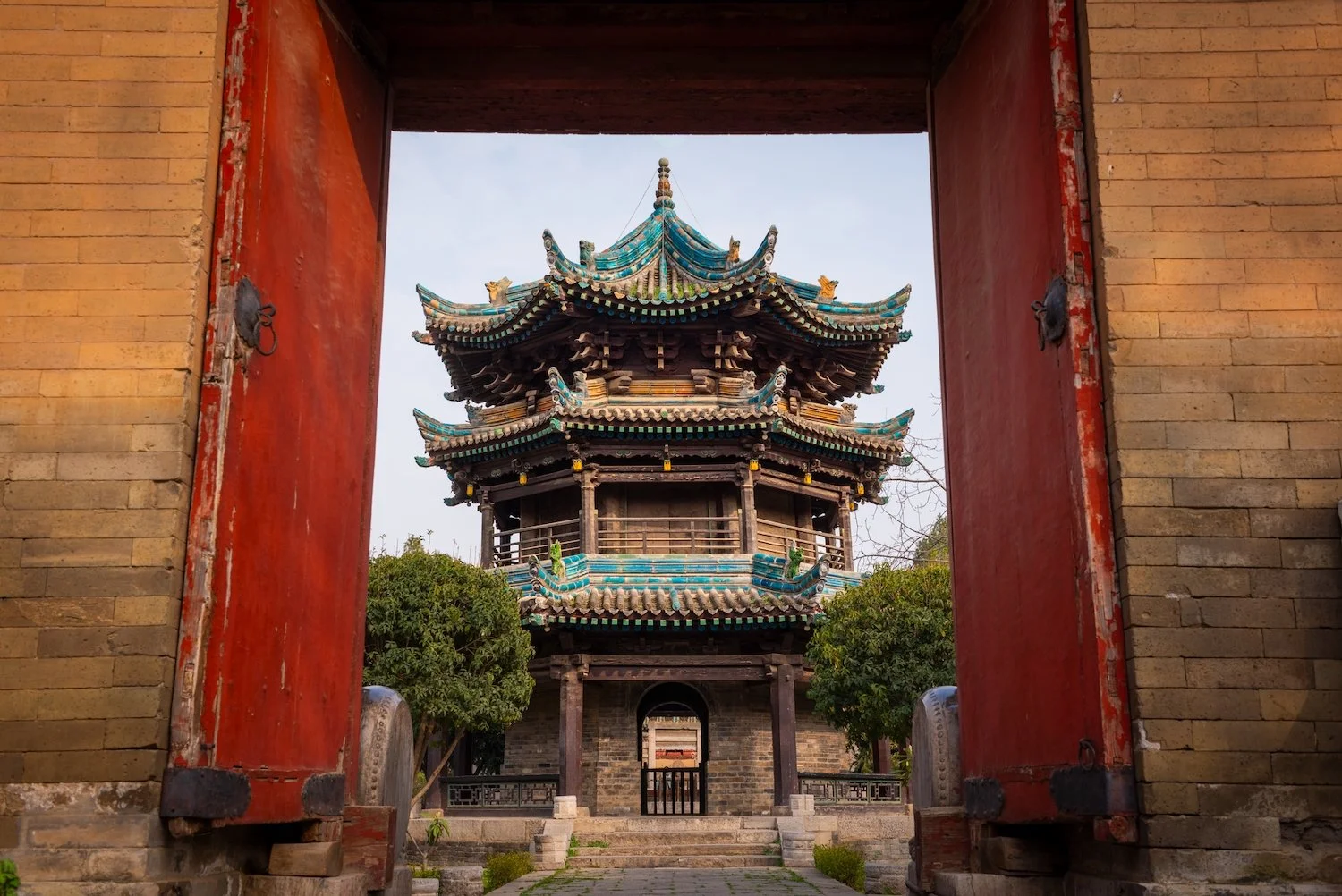
Great Mosque of Xi'an